
Gelco Chimney Sweep in Sandy: A Homeowner’s Guide
If a chimney contractor mentioned “Gelco” during your estimate and you nodded along without fully understanding what it meant for your specific job, you’re not alone. The name lands in a lot of estimates and almost nobody explains it. Here’s the short version: Gelco is a brand of chimney maintenance products, best known for sweep logs and chemical treatments that help loosen creosote between professional visits. It is not a replacement for a physical sweep, and it’s not a repair. Knowing where it fits, and where it doesn’t, matters when you’re deciding whether the work proposed is the right call for your home in Sandy. If you’d rather have someone walk you through it, call (855) 658-5256.
What are Gelco chimney products, exactly?
Gelco makes products that work on the chemistry of creosote rather than on the chimney with a brush. The two you’ll hear about most are sweep logs and chemical treatments, and they do related jobs in slightly different ways.
- Sweep logs are burned in the firebox like a normal log. As they burn, the compounds in them act on the creosote coating on the flue walls, making it brittle and easier to remove.
- Chemical treatments are applied to the flue itself, usually as a powder or liquid, and work on the same principle from the inside of the chimney rather than the firebox.
- What neither one does is remove the creosote. That still takes a brush, a rod, and someone standing on the roof or working from the top of the flue. The product softens the problem; the sweep clears it.
That distinction is the whole point. A sweep log is a maintenance supplement. It can make a hard, glazed layer of creosote more cooperative, which makes the next sweep more thorough and easier on the flue. But a log burned in a chimney that’s already heavily loaded with creosote doesn’t clean anything. At worst it loosens material that then sits in the flue doing nothing useful. That’s why a product like this belongs inside a service visit, with someone who has already looked at the flue and knows what stage the buildup is at.
In Sandy, where a lot of homes burn through a real winter, creosote accumulates steadily. A sweep log used between professional visits can slow the hardening. It cannot reset the clock on a sweep.
Do Gelco treatments replace a professional chimney sweep?
No. A Gelco treatment does not replace a professional sweep, and no honest chimney specialist will tell you otherwise. The treatment prepares creosote for removal; it does not remove it, inspect the flue, or tell you whether the liner is sound.
Think of it the way you’d think about a pre-treatment on a dirty pan. It makes the scrubbing work better. Somebody still has to scrub.
Here’s where we see the confusion most often in Sandy. A homeowner reads about sweep logs, buys one, burns it, and figures the chimney is handled for the season. What actually happened is that some creosote on the flue walls got brittle and a good deal of it is still right where it was. The fire still burns. The chimney still drafts. Nothing looks wrong from the living room, which is exactly why this misunderstanding persists.
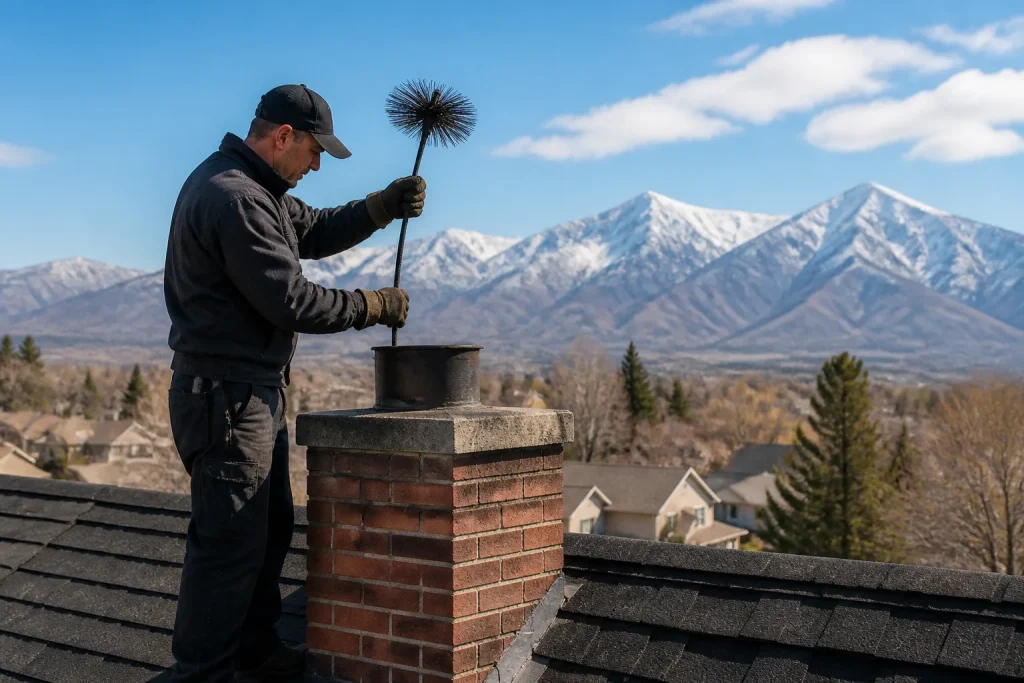
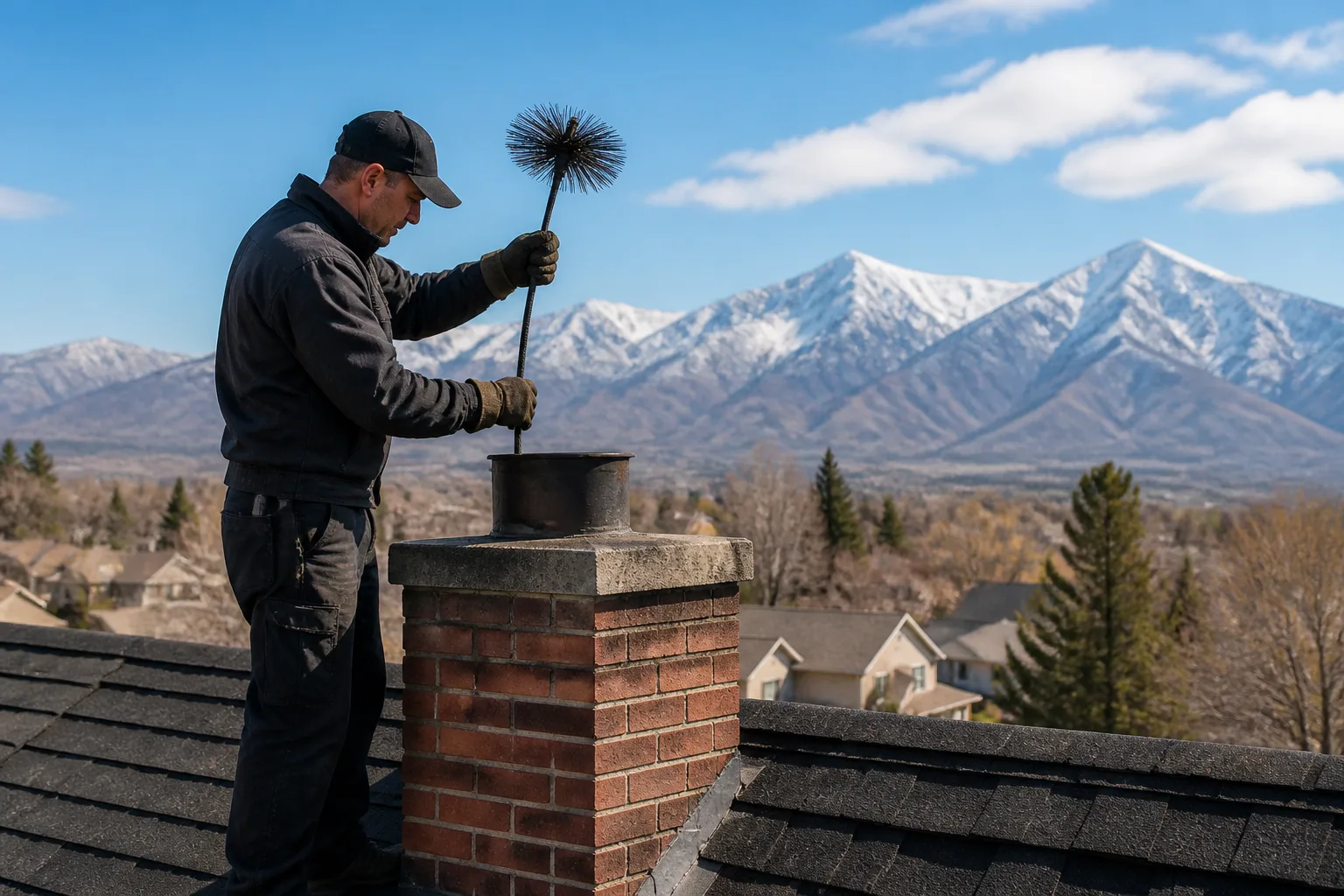
A real chimney sweep involves mechanical removal with proper brushes sized to the flue, a check of the firebox and damper, and a look at the cap and crown from the roof. The product can be part of that routine. It can’t stand in for it. As a rule of thumb for Sandy homeowners: a treatment used in the weeks before a scheduled sweep helps. A treatment used instead of a scheduled sweep just delays one.
Where does Gelco fit in a full-scope chimney service?
In our work, a product like Gelco fits as a small part of a larger sequence. It’s a step, not a service. That sequence usually looks like this:
- Inspection first. We look at the flue before recommending anything. A formal inspection tells us how much creosote is present and what condition the liner is in. Without that, any product recommendation is a guess.
- Chemical treatment where it earns its place. If the creosote is hard or glazed, a treatment softens it so the sweep is more complete. If the buildup is light, the treatment adds little and we say so.
- Mechanical sweep. Brushes clear the flue. This is the part that actually removes the creosote.
- Repairs as needed. A cracked crown, a failing cap, or liner damage found during the sweep gets addressed with the right materials. We work with DuraFlex flexible liner systems for complex flue configurations and HeatShield ceramic resurfacing where a liner can be restored rather than replaced.
That last step is where a product-only approach falls apart. Someone who sells you a sweep log isn’t checking your crown. A general handyman who offers to “clean the chimney” usually isn’t equipped to repair what the sweep turns up either. In Sandy, that gap matters because the same dry, cold winters that drive heavy fireplace use also work on masonry and mortar. From the firebox to the crown, one specialist should be able to handle what the inspection finds. The sweep, the inspection, the repair, and the chimney cap & crown work all belong to the same trade, and splitting them across three contractors is how details get missed.
What should you ask before agreeing to a Gelco treatment?
Ask two questions, and don’t accept vague answers to either. They’re the difference between a treatment that helps and a line item you didn’t need.
- “What problem specifically is this solving?” A good answer names the condition: glazed creosote, a hard third-degree layer, heavy buildup that a standard brush struggled with last time. A bad answer is “it’s good maintenance” with nothing behind it. Maintenance for what, based on what evidence?
- “How will we verify it worked?” The answer should involve looking at the flue after the sweep. If a treatment was proposed to soften creosote, the sweep afterward should be visibly more complete, and you should be told what changed. A before-and-after look, whether by camera or by a technician explaining what came down, is the proof.
One more question is worth adding in Sandy: “Is this included in the sweep or is it an extra?” Both answers are legitimate. A treatment is a real product with a real cost, and it’s reasonable for it to be its own line on the estimate. What isn’t reasonable is a treatment presented as if it were the sweep itself.
If a contractor can’t say what the treatment is for and how they’ll know it worked, that’s your answer. You don’t need the product. You need a sweep and an honest look at the flue.
Why brand-name materials are a credibility signal in an estimate
When a chimney estimate names specific products, that’s a signal worth reading. It means the contractor has made a choice and is willing to stand behind it in writing. When an estimate says “liner” or “sealant” with no brand and no specification, you’ve been told nothing you can check.
This is true for treatments and it’s especially true for repairs. We specify materials because the difference between grades shows up years later:
- Liner systems. We install DuraFlex flexible liner systems for chimneys with offsets and bends that rigid liners can’t navigate.
- Liner restoration. HeatShield ceramic resurfacing can restore a damaged liner in qualifying chimneys rather than relining the whole flue, which is often the less invasive answer.
- Venting and components. Famco and Copperfield parts are precision-manufactured and used across the trade, and Olympia Chimney components round out what we specify when a job calls for them.
None of this is about brand loyalty for its own sake. A named product is a claim you can verify. An unnamed one isn’t. In Sandy, where the freeze and thaw cycle is hard on masonry, the material chosen for a crown or a liner is the thing that determines whether you’re back on the phone in three years. Ask what’s going in, and ask why that one.
When to call a pro instead of reaching for a product
Some chimney situations call for a person on the roof, not a log in the firebox. Call a professional if any of these sound familiar:
- You smell a strong, sharp odor from the fireplace even when it’s not burning
- Smoke rolls back into the room instead of going up
- You’ve burned a lot of wood and haven’t had the chimney swept in a while
- You see cracked mortar, a loose cap, or staining on the exterior masonry
- You’re reactivating a fireplace that’s sat unused for years
Creosote buildup is the fire risk, and a blocked or damaged flue is the carbon monoxide risk. Neither is something to manage with a product and hope. Our technicians have up to 9 years of experience, and every visit includes a camera inspection with a photo report, so you see what we see. A sweep is booked in advance and the written estimate sets the price, so there are no surprises when the work is done.
Related services in Sandy: if the sweep turns up firebox or damper problems, fireplace repair is part of the same visit plan. If you just need a baseline on the chimney’s condition, a formal inspection stands on its own and gives you a documented assessment you can reference later.
The Bottom Line
Gelco products are useful, honest tools when they’re used honestly. A sweep log or chemical treatment can soften hard creosote and make a professional sweep more thorough, and that’s a real benefit. What they can’t do is replace the sweep, inspect the flue, or repair what’s broken. If a contractor proposes one, ask what problem it solves and how you’ll verify the result. The answers tell you everything about the rest of the estimate.
At Sandy Chimney Sweep, we use professional-grade products from brands like DuraFlex, HeatShield, Gelco, and Olympia Chimney as part of full-scope service, from sweep to repair. If you’re in Sandy and need help, Sandy Chimney Sweep offers free estimates. Call (855) 658-5256. We answer 24/7. Fast dispatch from 7am to 7pm, Sunday through Friday.
Frequently Asked Questions
A Gelco sweep log is a product burned in the firebox that makes creosote on the flue walls brittle so a brush can remove it more completely. It works as a supplement to a professional sweep, not as a replacement. It softens the buildup; the sweep removes it. If your chimney hasn’t been swept in a while, the log alone won’t make it safe. Call (855) 658-5256 for an exact quote. Estimates are free.
No. A sweep log doesn’t remove creosote, inspect the flue, or check the cap and crown, so it can’t stand in for a professional sweep. It’s a maintenance step between visits, not a substitute for one. In Sandy’s cold winters, where fireplaces see steady use, a mechanical sweep is still the only way to clear the flue. Call (855) 658-5256 to book a sweep.
Most chimneys used regularly should be swept once a year, and more often if you burn heavily or notice smoke rolling back. An annual inspection catches creosote buildup and liner problems before they become expensive. A treatment product can help between visits but doesn’t change the schedule. Call (855) 658-5256 for an exact quote. Estimates are free.
Named products are claims you can verify; unnamed ones aren’t. When an estimate specifies DuraFlex, HeatShield, Gelco, or Olympia Chimney, you can look up what’s going in and why. When it just says “liner” or “sealant,” you’ve been told nothing checkable. Ask what’s being installed and why that product. Call (855) 658-5256 for an exact quote. Estimates are free.
Written by the team at Sandy Chimney Sweep.
Need Chimney Cleaning Help?
Call Sandy Chimney Sweep - the local pro we connect you with is licensed and insured, here with fast help in Sandy.
(855) 658-5256