
Last updated November 25, 2026
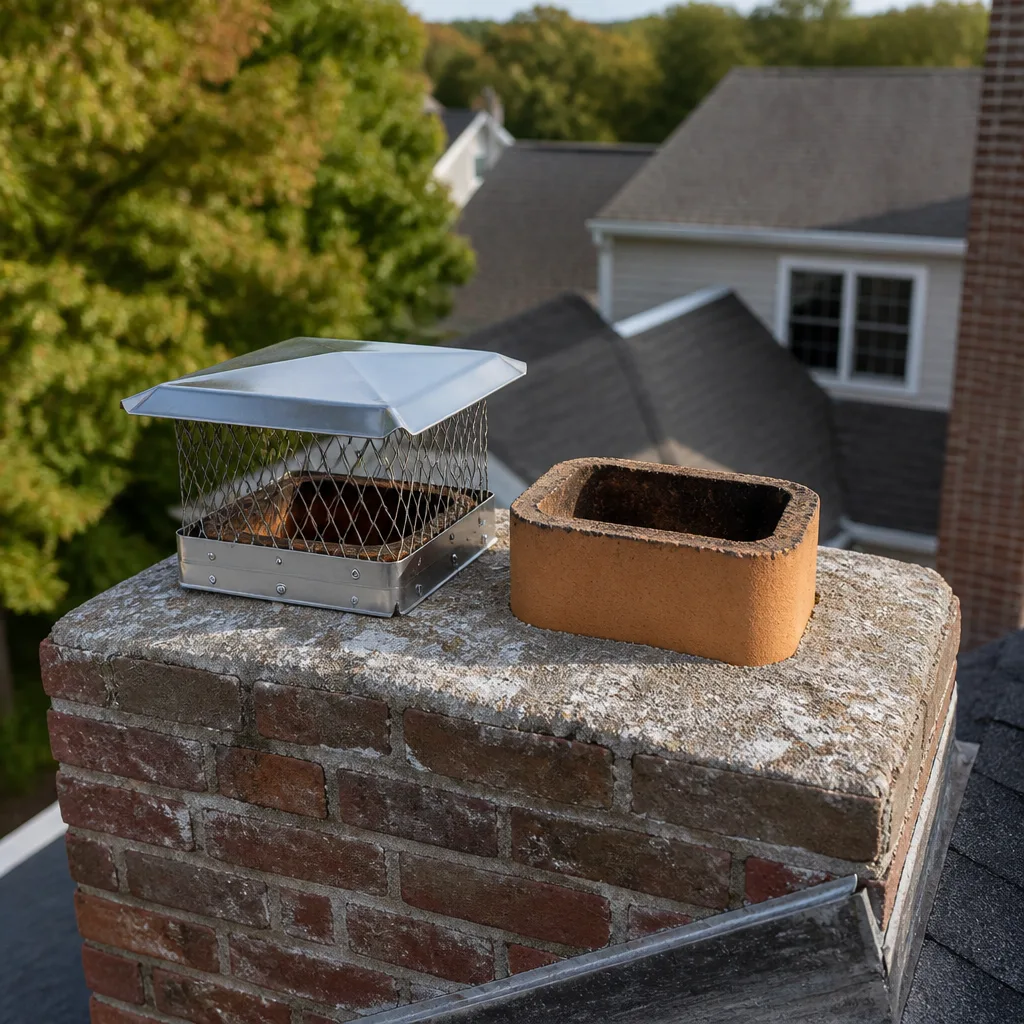 Sweep & inspection
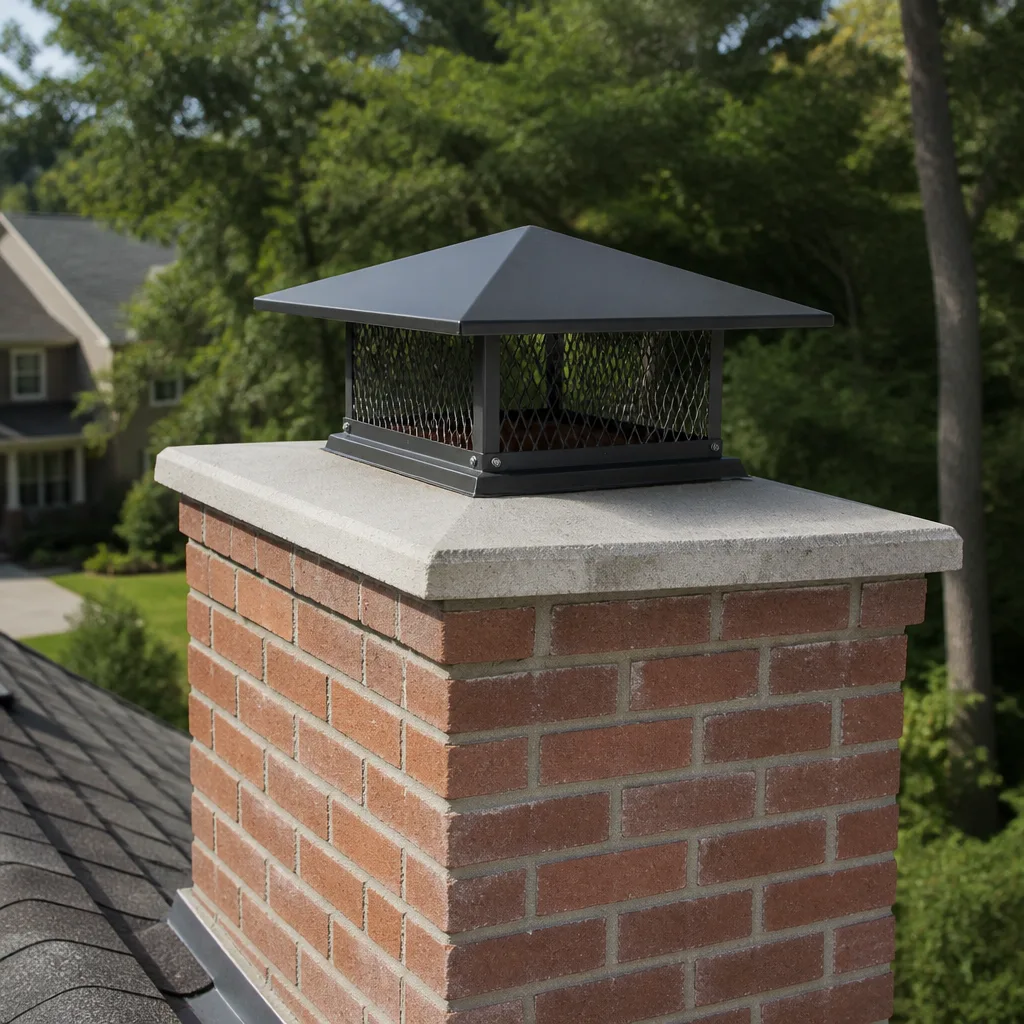 Caps & crowns
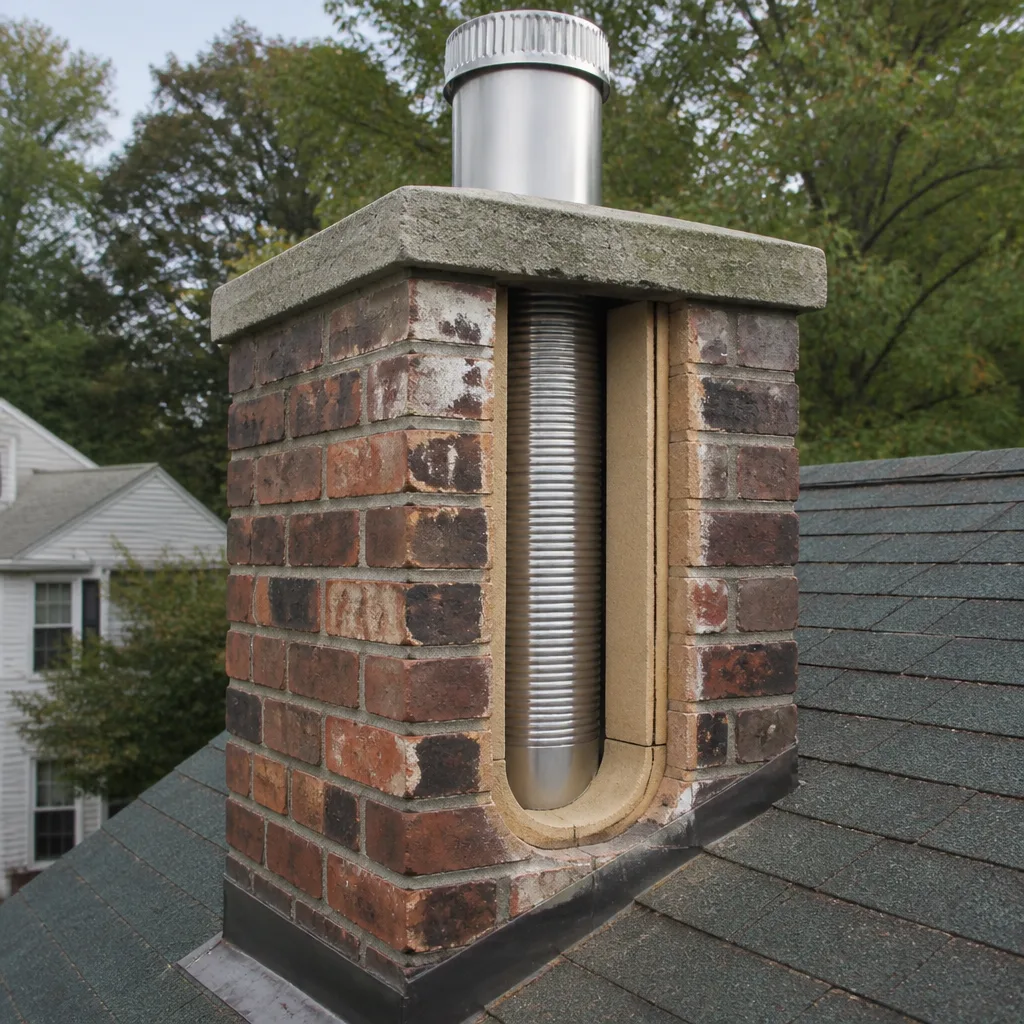 Flue relining
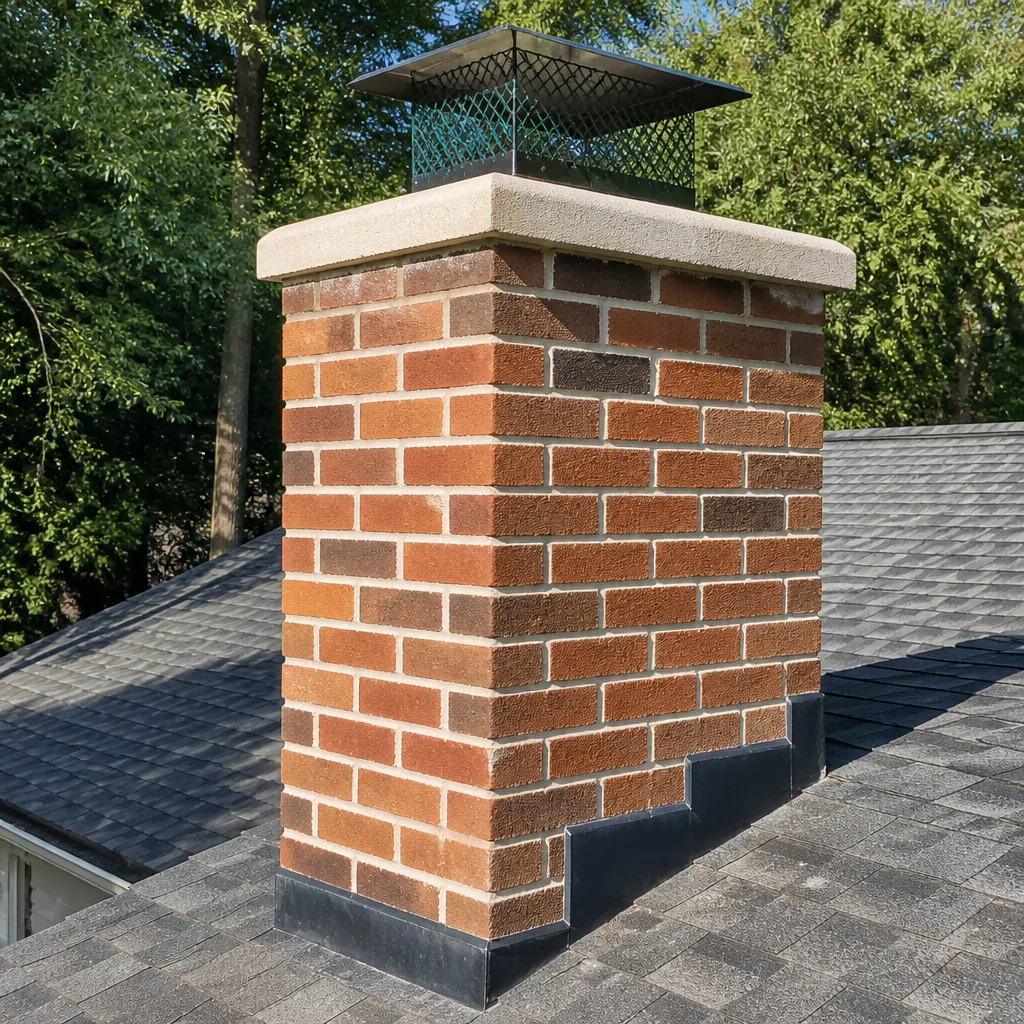 Masonry repair
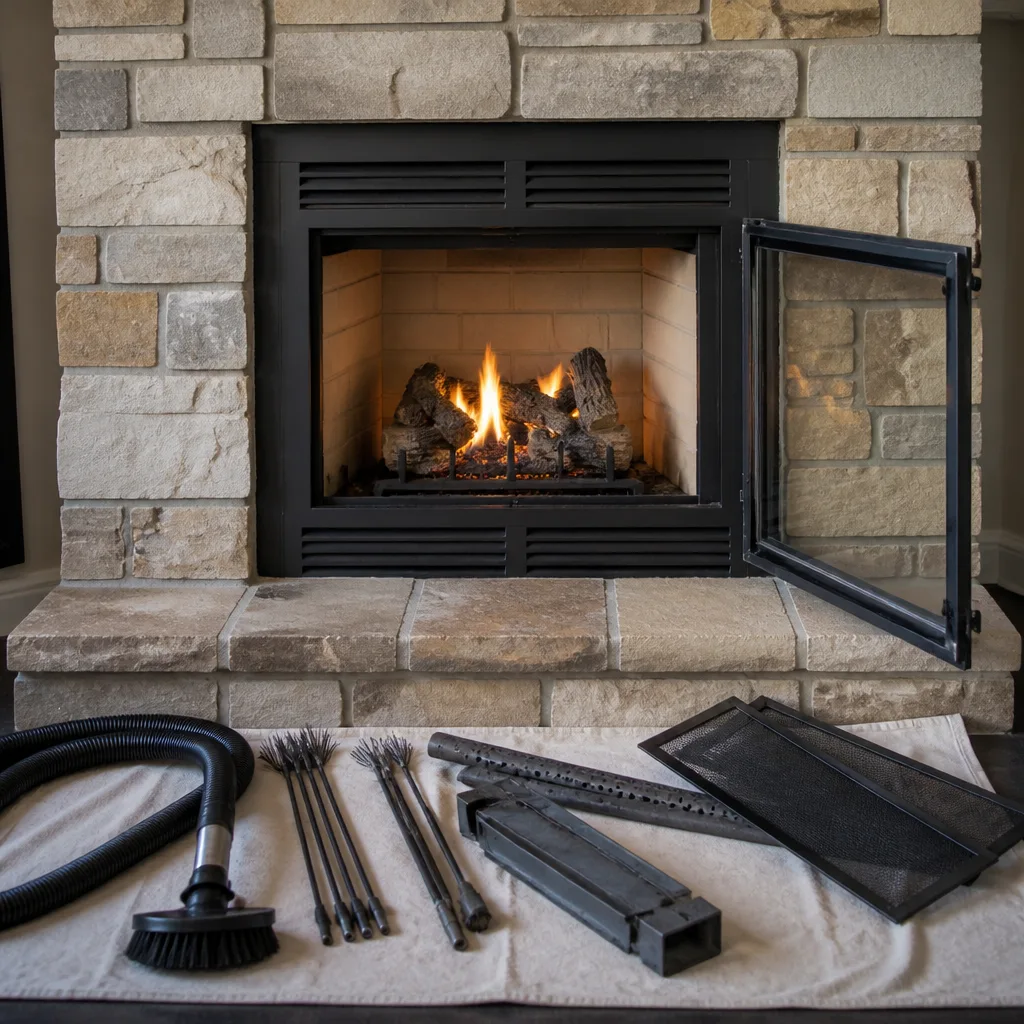 Gas fireplace service
Level 1 sweep and inspection to the NFPA 211 annual standard - flue, crown, cap, and flashing checked and photographed
Chimney sweep logs do not sweep chimneys. They loosen some creosote - which then falls where a brush and vacuum still have to collect it.
Chimney Cleaning Warning Signs: A Sandy Homeowner’s Reference Guide
Most homeowners picture a chimney problem as something dramatic: a roaring flue fire, a ceiling stain the size of a dinner plate, a puff of smoke where smoke shouldn’t be. In our experience, the real trouble almost never announces itself that way. Chimneys fail slowly. They whisper first. A strong smoke smell in a room with a closed damper isn’t a draft quirk or a quirk of your house settling; it’s a chimney telling you it has a negative pressure problem, a blockage, or a liner breach, and those three things have three completely different fixes. This guide is organized around what you smell, see, hear, and feel, because those senses catch problems months before they turn dangerous. We’ll walk through the sensory warnings you can check yourself, what each one typically points to, and which deserve a same-week call versus a spot on your annual visit. If you heat with wood in Sandy, this is the reference we’d hand you in person.
Quick Answer
The warning signs that matter most are a smoke or creosote smell in a closed room, glazed or flaking creosote inside the firebox, smoke rolling back into the room at startup, a draw that’s gotten sluggish, staining or white powder on exterior masonry, and loose flashing where the chimney meets the roof. Any one of these means your chimney should be inspected before the next fire. Signs that involve smoke indoors, a smell with the damper shut, or a visible liner failure deserve a call this week.
Styles & brands we work with
- Sweep & inspection
- Caps & crowns
- Flue relining
- Masonry repair
- Gas fireplace service
Table of Contents
- What Your Nose Is Telling You: The Three Chimney Smells
- Reading the Firebox: What You Can See Without Tools
- Performance Red Flags: Smoke Rollout, Sluggish Draw, and Fires That Won’t Stay Lit
- Exterior Warning Signs You Can See From the Ground
- The Triage Framework: What Can Wait and What Can’t
- Sandy Conditions and the Creosote Cycle
- What You Hear: Sounds From a Chimney That Needs Attention
- What a Proper Inspection Actually Looks At
What Your Nose Is Telling You: The Three Chimney Smells
Chimney smells are not one thing. A homeowner who says “my chimney smells” could be describing three very different conditions, and separating them is the single most useful skill in this guide.
The normal post-burn odor. After a fire dies down, a faint smoky smell can drift into the room for a short time. That’s ordinary. Wood smoke lingers in the firebox and the flue, and as the chimney cools, a little of it can find its way back inside. If the smell fades within an hour or so and only shows up right after you’ve had a fire, there’s no mystery to chase.
Creosote smell under humidity. This one is sharper and more acrid than wood smoke, and it tends to get worse on humid days, when rain is coming, or in the shoulder seasons when you aren’t burning. Creosote is the residue of incomplete combustion, and it’s hygroscopic, meaning it absorbs moisture from the air. As it takes on water, it releases that telltale sour, tarry scent. When you notice this smell with no fire in the firebox, you’ve got creosote buildup in the flue, and the buildup is thick enough to register. That’s a sweep.
The acrid smell with the damper closed. This is the one that deserves a phone call, not a note in the calendar. If you smell smoke or a harsh chemical odor in a room when the damper is shut, something is pushing exhaust back into your living space through a path it shouldn’t have. In our experience that points to one of three things: a blockage in the flue (a nest, a collapsed liner tile, heavy creosote), negative pressure in the house pulling air down the chimney, or a breach in the liner letting gases escape into the chimney structure and then the home. Those have three different fixes, and a proper inspection sorts out which one you’re facing. None of them are safe to ignore, because the smell is a small preview of what carbon monoxide could do in the same conditions.
When you call, describe the smell plainly. “It smells sour on damp days” and “it smells smoky when the fire isn’t lit” send an inspector down two different paths before they ever arrive.
Reading the Firebox: What You Can See Without Tools
You don’t need to climb a roof or handle a flashlight in the flue to learn a lot about your chimney. The firebox and the smoke shelf right above it are visible with the doors open and a decent light. Here’s what to look for.
Glazed creosote and its color changes
Creosote passes through stages. Fresh creosote looks like a dusty, sooty film. As it thickens it becomes flaky and crusty. The stage that worries us is glaze: a hard, shiny, tar-like coating on the firebox walls or the flue that looks like black glass. Glazed creosote is the most concentrated form, and it’s the fuel behind most serious flue fires. If you see a glassy sheen where you used to see soot, don’t burn again until the chimney has been swept.
Mortar joint recession
Run your eye along the mortar joints between the firebrick. Normal joints sit roughly flush with the brick face. If the mortar has eroded inward – recessed lines between proud bricks – the firebox has been running hot or wet over time, and the joints need repointing. A receded joint lets heat and gases reach places they don’t belong.
Liner tile fragments on the smoke shelf
The smoke shelf is the flat ledge just behind the damper. Look there for chips, flakes, or fragments of clay tile. If you find them, a liner tile has cracked somewhere above and shed material downward. A cracked liner tile is a gap in your chimney’s internal protection, and that gap is a path for heat and carbon monoxide. This is one of the few signs a homeowner can spot unaided that genuinely calls for a prompt inspection.
White staining on the firebox walls
Chalky white deposits inside the firebox usually mean moisture has been in the chimney, either from a leak above or from condensation. Where there’s persistent moisture, there’s usually damaged mortar nearby.
Performance Red Flags: Smoke Rollout, Sluggish Draw, and Fires That Won’t Stay Lit
A chimney that worked fine last winter and doesn’t this one is telling you something changed. Here’s how to read the three most common performance complaints, and what each typically points to.
- Smoke rollout at startup. A little puff when you first light a cold fire is normal. Smoke rolling steadily out of the opening for several minutes, or spilling into the room as the fire builds, is not. It usually points to a flue that’s undersized for the opening, a partial blockage near the top, an obstruction like a bird nest, or negative pressure in the house pulling against the draft.
- Sluggish draw that wasn’t there last season. The fire lights, but it struggles. It draws weakly, the flames look lazy, and the draft feels like it’s pushing back. Creosote accumulation and partial blockages are the leading suspects. So is a chimney cap whose screen has clogged with soot and debris.
- Fires that won’t stay lit. When good dry wood keeps going out, the chimney may not be venting at all. That’s often a complete or near-complete obstruction. It’s also a carbon monoxide concern, since a fire that can’t vent pushes exhaust back into the room.
Smoke in the room is the one performance sign we’d never sit on. Burning a fire through smoke rollout doesn’t clear up with patience. It tends to worsen.
One thing to rule out first: wet wood. If you’ve loaded in logs that feel heavy or hiss at the ends, the wood itself may be the problem rather than the chimney. Try a batch of well-seasoned wood before you call. If the poor performance holds with dry wood, book the inspection.
Exterior Warning Signs You Can See From the Ground
Walk to your back fence, or step out to the sidewalk, and give the chimney a slow look from the ground. The exterior tells a story, but only if you know which zone of the chimney to interpret.
Staining patterns and where they sit
- Staining near the top of the stack, below the crown. This is usually a failing crown or a cap that isn’t shedding water. Water gets in at the top and runs down.
- Streaking down the full face of the chimney. Runoff carrying soot and dissolved creosote, often linked to heavy flue deposits or a missing cap.
- Dark staining where the chimney meets the roof. Most often a flashing problem. When the flashing lifts or its sealant fails, water reaches the attic and the framing below.
- Staining low on the masonry, near the roofline transition. Can point to water wicking up from a saturated roof or a masonry face that needs repointing.
Efflorescence and what its location means
Efflorescence is the white, powdery bloom sometimes called masonry salt. It appears when water moves through brick or mortar and evaporates at the surface, leaving minerals behind. White bloom spread evenly across the chimney face usually means moisture is traveling through the masonry generally, often from a failing crown or from rain soaking in over time. Powder concentrated only near the flashings or a joint means the water is entering there specifically. If the white deposits feel crumbly and seem to be coming from inside the brick rather than sitting on top, the masonry has been wet long enough to damage it.
Flashing separation
Flashing is the metal that seals the joint between chimney and roof. Look for a visible gap, lifted metal, or cracked caulk along its edges. Water at the flashing is one of the most common paths for leaks into a Sandy home, and it gets worse every freeze-thaw cycle.
Things that belong, not things that rust
A cap on top is good news, not a warning. A properly fitted cap and screen keeps out rain, birds, and debris. If the cap is bent, missing, or has a ripped screen, that’s the version of the cap story that needs attention.
The Triage Framework: What Can Wait and What Can’t
Not every warning sign carries the same urgency. Here’s how we’d sort what you find, from “call this week” down to “put it on the annual visit.”
Call this week
- Smoke rolling into the room when there’s a fire going.
- A smoke or chemical smell in the room with the damper closed.
- Visible cracks in the firebox or liner tile, or chunks of tile on the smoke shelf.
- Flue fire signs: a loud roar or rumble, a smell of hot metal, discolored metal components, or puffy, honeycombed creosote after a fire.
- A carbon monoxide detector going off while a fire is burning. Leave the space, ventilate, and call before you burn again.
Schedule within a few weeks
- Glazed creosote visible on the firebox walls.
- Smoke smell from the chimney on humid days with no fire lit.
- Sluggish draw that you’ve confirmed isn’t wet wood.
- Exterior staining or efflorescence that’s clearly growing.
- Flashing separation you can see from the ground.
Can wait for the annual visit
- Light, dusty soot buildup.
- A faint post-burn smell that fades within an hour.
- A cap screen with light debris that still looks intact and functional.
- Mortar joints inside the firebox that look slightly uneven but haven’t receded.
If you’re not sure which column your sign belongs in, call it in. A phone conversation isn’t a diagnosis, but it’ll put the finding in the right bucket and tell you whether it’s the week or the annual visit. Call (855) 658-5256. We answer 24/7. Fast dispatch from 7am to 7pm, Sunday through Friday.
Nobody recommends a repair without evidence. An inspection gives you camera photos and a written report you can read on your own time. We’d rather tell you a chimney can wait than sell you a reline on a suspicion.
Sandy Conditions and the Creosote Cycle
Wood-burning in Sandy comes with its own rhythm, and knowing the local pattern helps you read your chimney’s signals sooner. Winters here swing between cold nights that demand steady fires and warmer stretches that mean the chimney sits idle. Those swings matter. Every cold start deposits a bit more creosote; every idle stretch lets deposits sit and absorb moisture whenever the weather turns damp. In Sandy that means the shoulder seasons – late fall before the real cold sets in, and early spring after the last fire – are when a creosote smell most often shows up unprompted, because the creosote is taking on moisture from the air rather than being burned off.
The other local factor is burning habits. Homes on the valley floor often burn more wood over the course of a winter than homes tucked into the foothills with shorter heating seasons, and slow, smoldering fires – the kind you bank overnight – leave behind a wetter, stickier creosote than hot, brisk fires do. Both are legitimate ways to burn, but they leave different residue patterns. When we sweep in Sandy, that pattern tells us how the homeowner heats, and it lets us warn them which stage of creosote they’re building toward on the next cycle.
One seasonal habit worth keeping: before you light the first fire of the year, do a walk around the chimney and open the firebox doors. A quarter hour of looking catches a surprising share of what the cold season would otherwise reveal in a hurry – a cracked crown after a freeze-thaw winter, a cap that’s been knocked askew, mortar joints that look a little more eroded than last year.
What You Hear: Sounds From a Chimney That Needs Attention
We spend most of this guide on smell and sight, but noise is a warning sign too, and it’s the one people most often dismiss as a quirk. A few sounds are worth taking seriously.
- Rumbling or roaring from inside the chimney. A continuous sound that feels bigger than the fire itself can signal a flue fire in progress, especially if it comes with a smell of hot metal or a pounding sound.
- Scratching or fluttering in the flue. Birds and squirrels find uncapped chimneys convenient. A nest is a blockage, and a blockage means smoke backdraft.
- Popping or ticking that continues after the fire has died. Masonry cooling normally makes a soft creak or two. Ongoing ticking can mean heat is working on components it shouldn’t be.
- A whistling draft. Usually a pressure issue, and often the same cause behind smoke rollout at startup.
You can’t hear a crack in a liner tile from inside your living room. But when a sound is loud enough to notice, it’s usually part of a larger signal – smoke, a smell, a fire that won’t stay lit. Those add up.
What a Proper Inspection Actually Looks At
An inspection is a formal, standalone service, not a quick look-upside and a verbal “you’re fine.” Here’s what a proper one covers, so you know what to expect and what to ask about.
- The firebox and immediate flue. The firebox interior, the damper operation, and the smoke shelf – all the surfaces you can see without tools.
- The full flue. A camera run from the top of the chimney down, checking liner continuity, joint condition, and creosote level. This is where a hidden crack or a collapsed tile turns up.
- The chimney exterior. Crown condition, masonry and mortar joint condition on every side, the cap and its screen, and the flashing where the chimney meets the roof.
- The attic framing. A look at the wood around the chimney in the attic, where water penetration and hidden rust on flashing often show up before they show below.
- A written report with photos. Documented findings you can keep for insurance, real estate, or your own maintenance calendar.
When a repair is warranted, the recommendation should name what’s wrong and what we’d use to fix it. A liner showing moderate damage in a qualifying flue can often be restored with HeatShield ceramic resurfacing rather than a full reline, which saves a lot of money on a lot of chimneys. Where a full liner is the answer, DuraFlex flexible liner systems handle configurations a rigid liner can’t. Caps and crowns get fitted with precision-manufactured components from brands the trade relies on, like Olympia Chimney. And if the issue is in the firebox itself, that falls under fireplace repair, handled in the same visit.
Common Mistakes to Avoid
- Burning through smoke rollout to “see if it clears.” A fire that’s spilling smoke into the room is a ventilation problem, and burning more wood doesn’t fix it. It sends more exhaust into the space.
- Treating creosote smell as a nuisance rather than a signal. When the smell is pronounced on a humid Sandy day and there’s no fire, the buildup has reached the stage where it needs to go.
- Assuming a swept chimney is a clean chimney. Sweeping removes soot and creosote; it doesn’t address a cracked crown, failed flashing, or a liner issue. Those need an inspection and, when warranted, a repair.
- Waiting for a visible warning sign before looking. Most of what we find in Sandy fireboxes is visible before it’s urgent, but not before it’s a problem. The firebox and the smoke shelf are yours to check.
- Patching exterior masonry without finding the water source. Cracks and efflorescence come from somewhere. Seal over the symptom and the water keeps coming back.
- Ignoring a cap that’s lost its screen. An open chimney is an invitation for birds and debris, and the fix is more involved once the nest is in.
- Letting a carbon monoxide detector alarm go unexplained. If the alarm sounds while a fire is going, don’t burn again until the chimney has been inspected. It’s not a test of the detector.
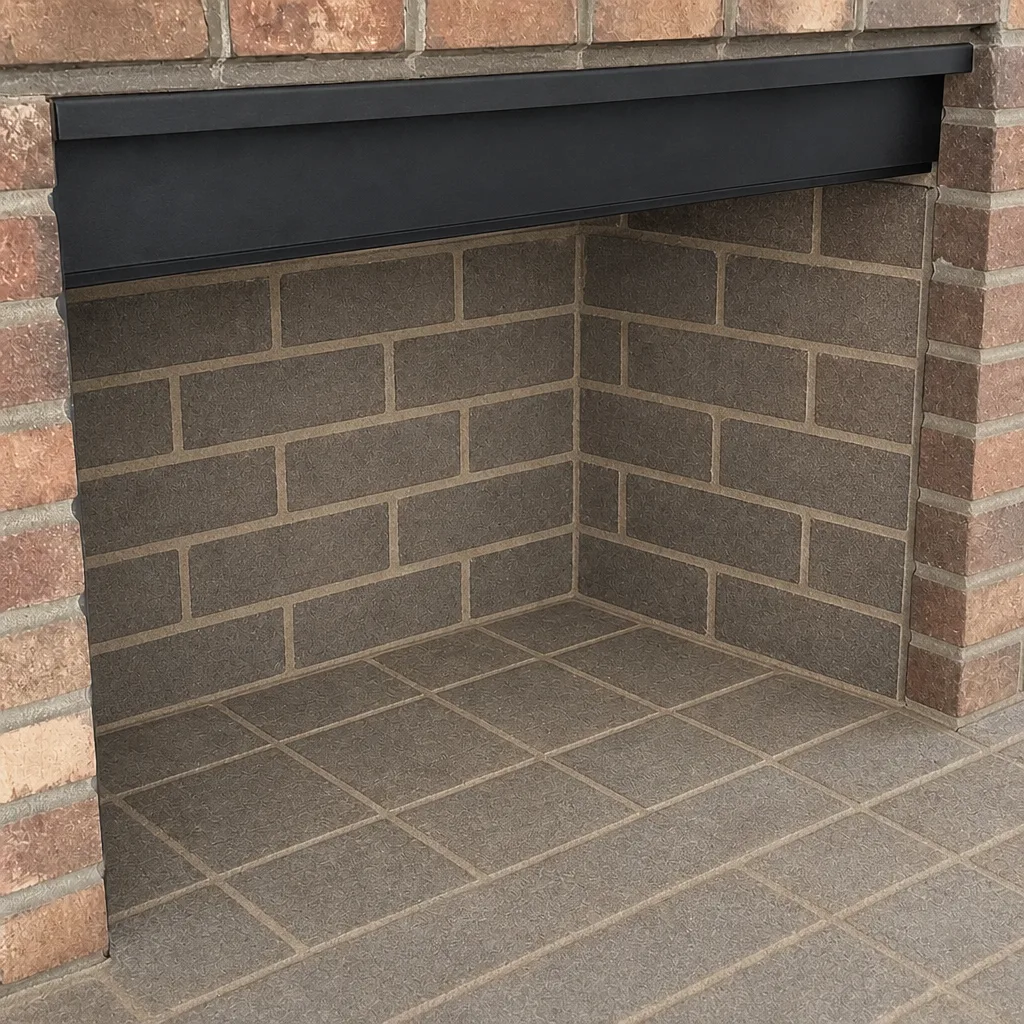
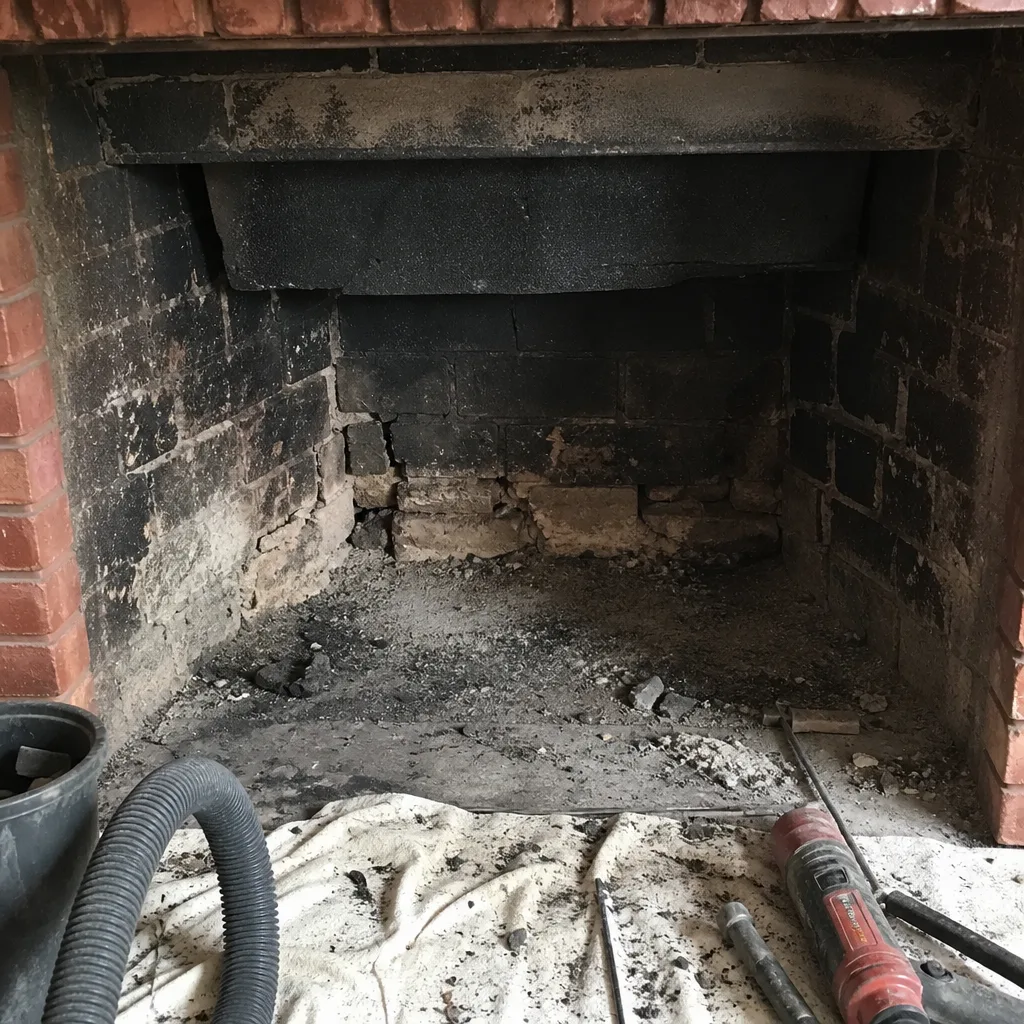
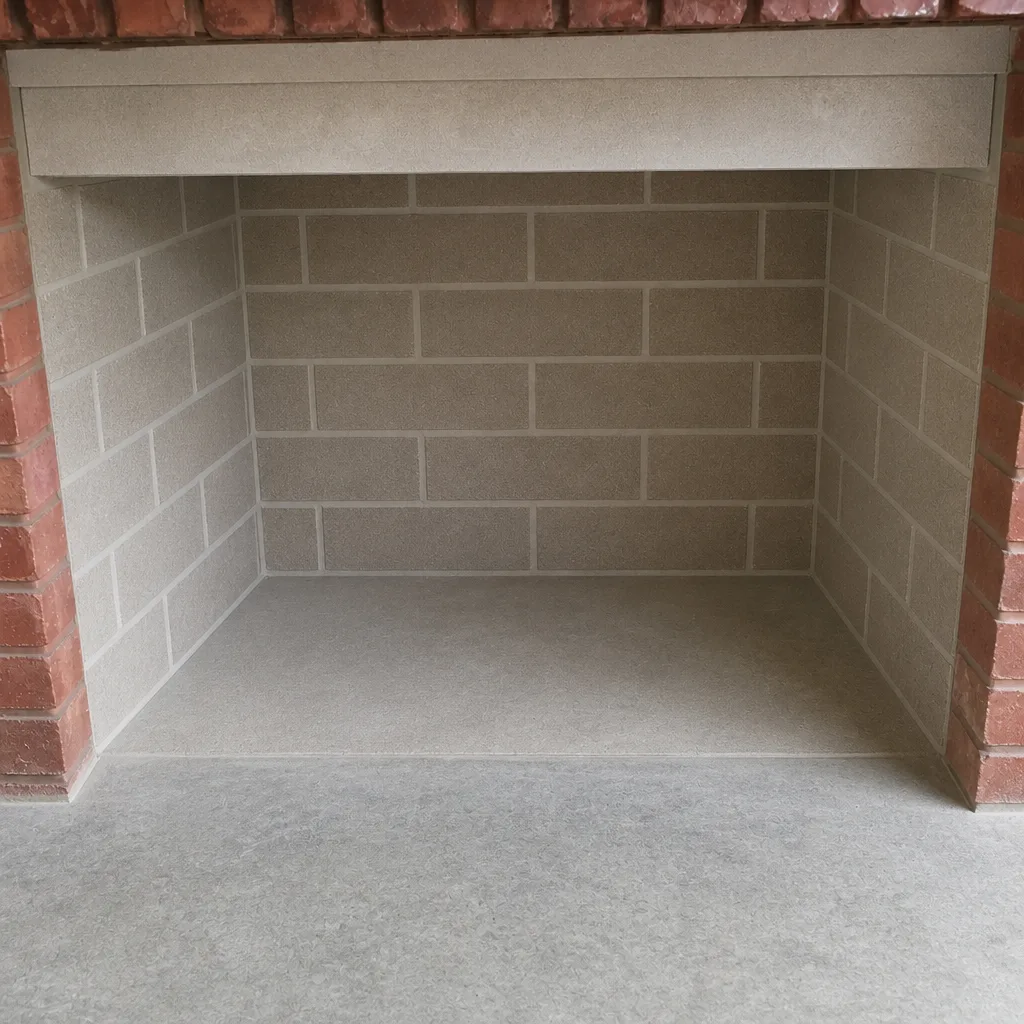
See the difference
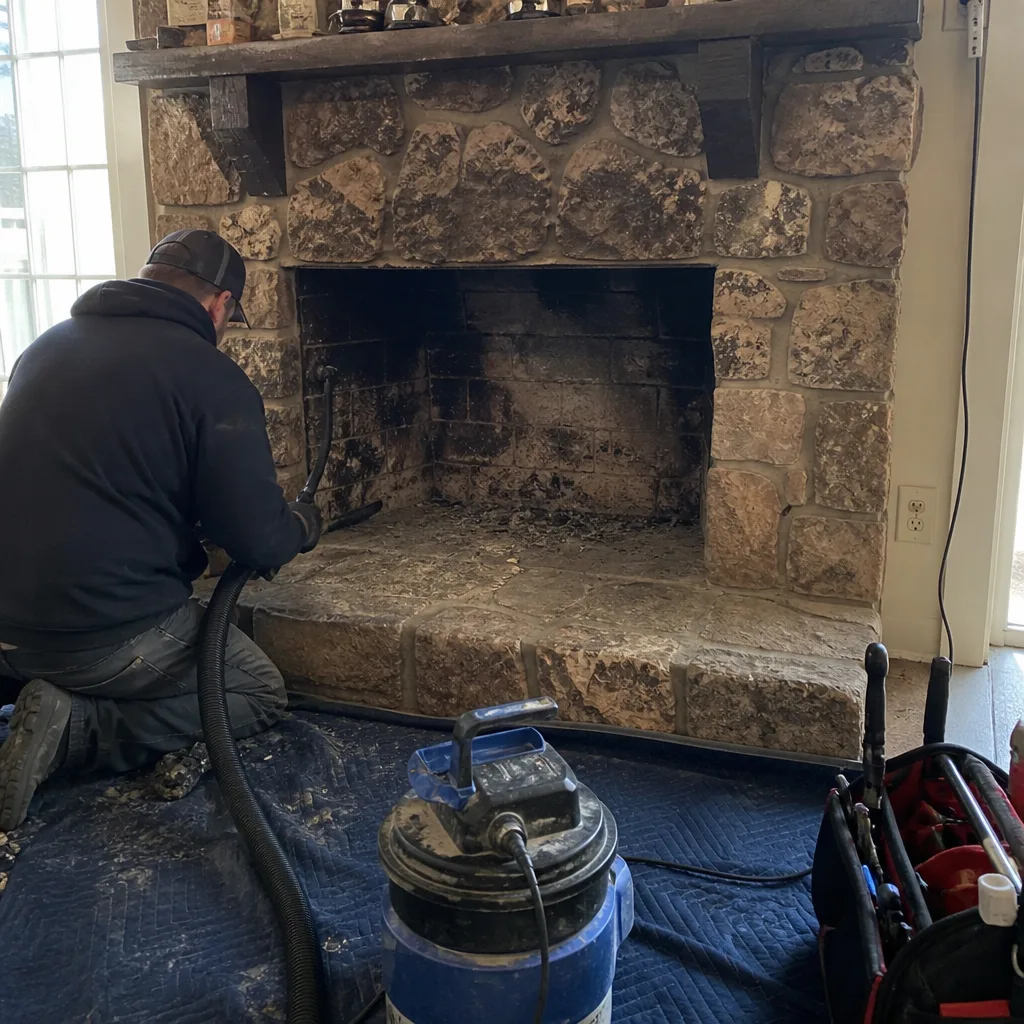 Before
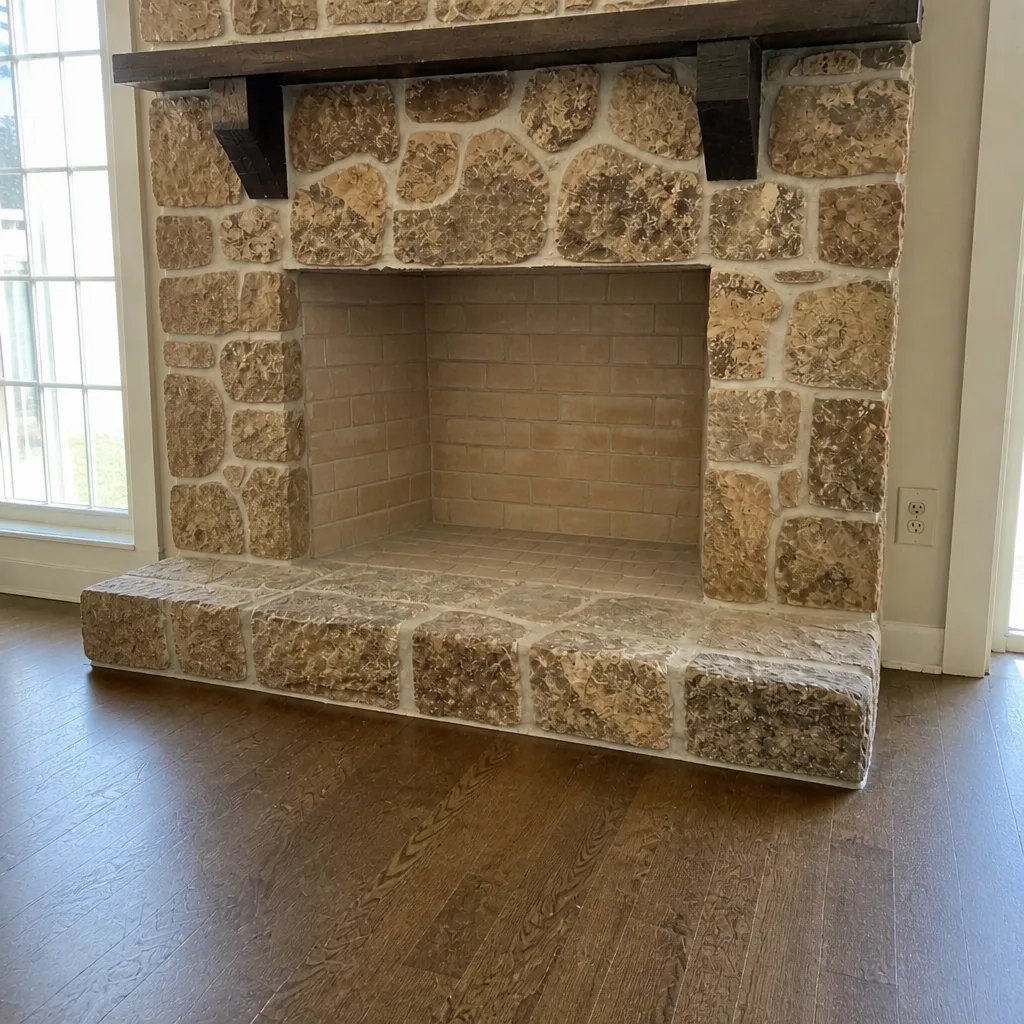 After
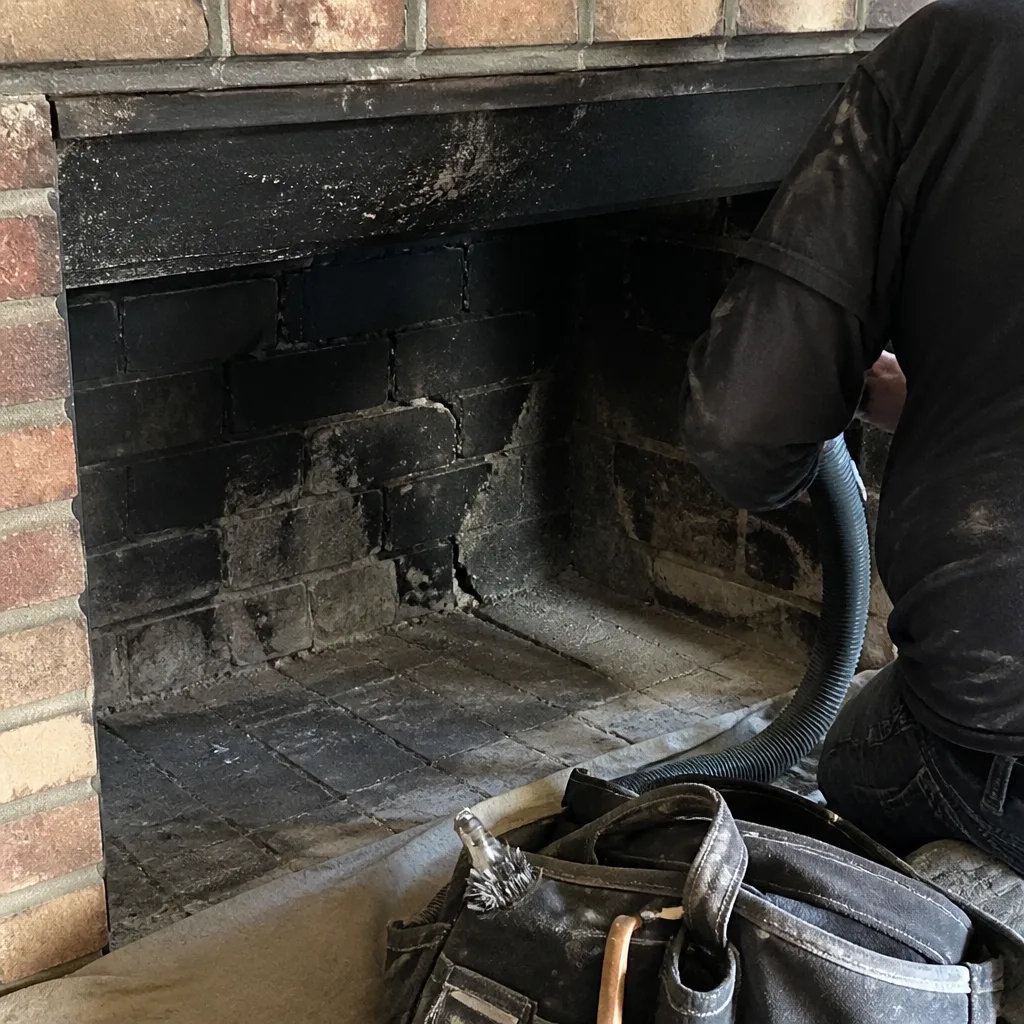 Before
 After
 Before
 After
When to Call a Professional
Call if you smell smoke or an acrid odor in a room with the damper shut, if smoke rolls out at startup, if you find liner tile fragments on the smoke shelf, or if you’ve seen the telltale signs of a flue fire. Call if your exterior masonry shows growing stains or white powder that wasn’t there a season ago, or if the flashing has pulled away from the roof. And call if you’re not sure what you’re looking at, because having someone look at it is a calmer way to find out than waiting for it to get loud. Our technicians have up to 9 years of experience reading chimneys for Sandy homeowners, and we walk you through what we find with photos in hand. From the firebox to the crown, one specialist handles it all, from a routine chimney sweep to chimney cap & crown work. Sandy Chimney Sweep offers free estimates in Sandy – call (855) 658-5256. We answer 24/7. Fast dispatch from 7am to 7pm, Sunday through Friday.
Frequently Asked Questions
Most wood-burning Sandy homes should have the chimney swept once a year, at the end of the burn season or before the next one starts. Homes that burn often, bank fires overnight, or use green or unseasoned wood should be looked at more frequently, since creosote builds faster. Annual is the base rule; the actual interval depends on how much you burn and how the flue is shedding residue. Call (855) 658-5256 for an exact quote – estimates are free.
A sour, tarry smell on humid days means creosote buildup is absorbing moisture from the air and releasing it into the room. That’s the most common chimney smell in Sandy in the shoulder seasons. It’s a sign the flue needs sweeping, and if the smell is strong, the buildup has reached a level worth attending to before the next season. Call (855) 658-5256 for an exact quote – estimates are free.
A brief puff when a cold fire is first lit can be normal, but smoke that continues rolling out of the opening is not. Ongoing rollout typically means a blockage, an undersized flue, or negative pressure in the house, and any of those can push carbon monoxide into the room. This is a same-week call, not a wait-and-see. Call (855) 658-5256 for an exact quote – estimates are free.
You can’t tell from the firebox alone. A liner is only condemned when a camera inspection shows cracked or displaced tiles, gaps in the joints, or a breach that lets gases escape into the structure. In a qualifying flue, moderate liner damage can often be restored with HeatShield ceramic resurfacing instead of a full reline, which is why the inspection comes first and the recommendation comes with photos. Call (855) 658-5256 for an exact quote – estimates are free.
An inspection is an assessment; a sweep is a cleaning. An inspection uses a camera, examines the full flue and the exterior, and produces a written report; a sweep removes soot and creosote. We offer both as separate services because you’ll want the report on file even in a year when a sweep isn’t due, and because a sweep without a look doesn’t tell you anything about the chimney’s condition. Call (855) 658-5256 for an exact quote – estimates are free.
Yes. The most valuable signs live where you can see them without a ladder: the firebox walls, the mortar joints, the smoke shelf. Glazed creosote, receded joints, and liner tile fragments all show up there, and they’re the leading hints of a flue problem the exterior never reveals. Walk to the chimney once a season, open the doors, and look. Call (855) 658-5256 for an exact quote – estimates are free.
The Bottom Line
The warning signs worth your attention are the quiet ones: a smell on a humid day, a smoke puff where there wasn’t one last winter, a glassy sheen on the firebox wall, a chalky bloom on the brick. Read them the way we do. Smell tells you about the creosote cycle and the draft. Sight tells you about the firebox, the crown, and the flashing. Performance tells you about the flow. When a sign puts your chimney in the “call this week” column, call it in. An inspection with a camera and a written report gives you a real answer, not a sales pitch, and it’s the least expensive way to know exactly what you’re working with before the first fire of the season. Everything from the firebox to the crown, one specialist handles it all.
Call (855) 658-5256 for a free estimate. We answer 24/7. Fast dispatch from 7am to 7pm, Sunday through Friday. Or start with a look at what Sandy Chimney Sweep does across the full life of your chimney.
Written by the team at Sandy Chimney Sweep.