
Last updated November 25, 2026
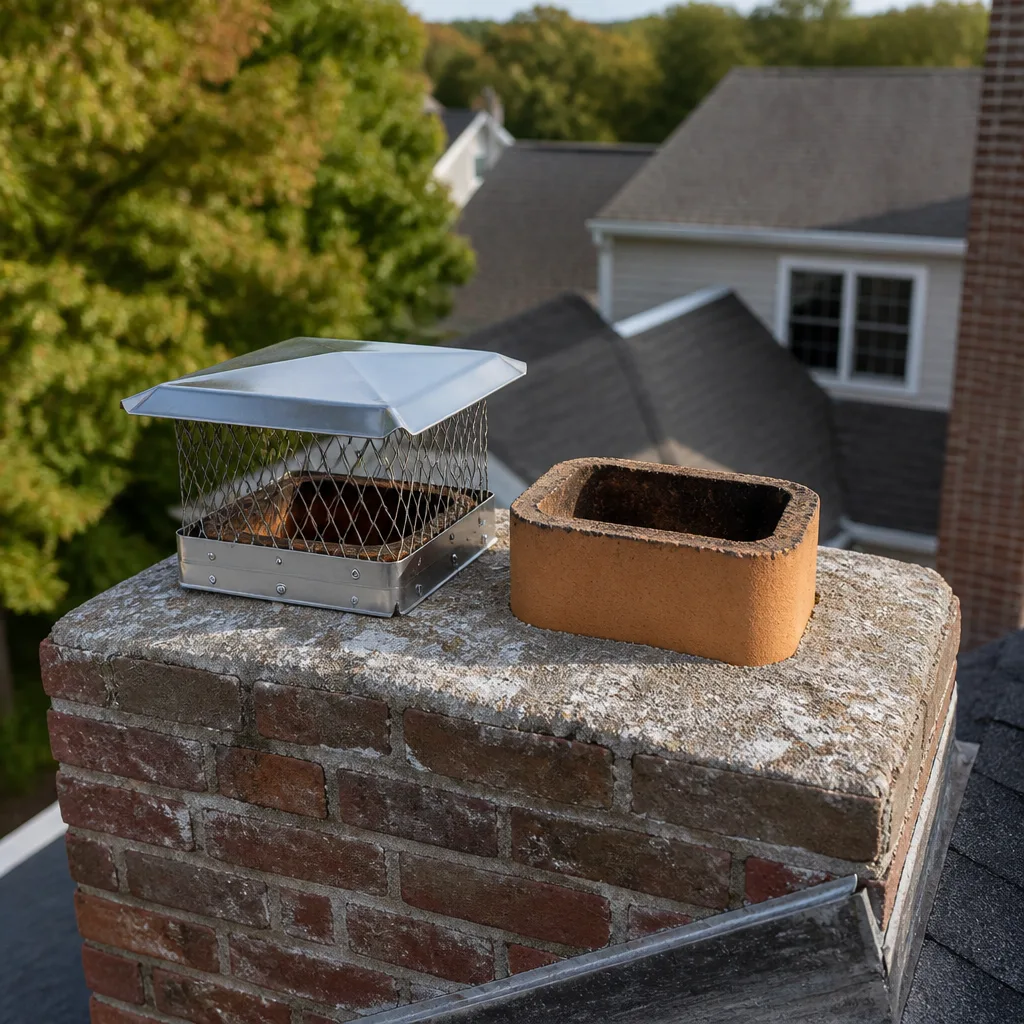 Sweep & inspection
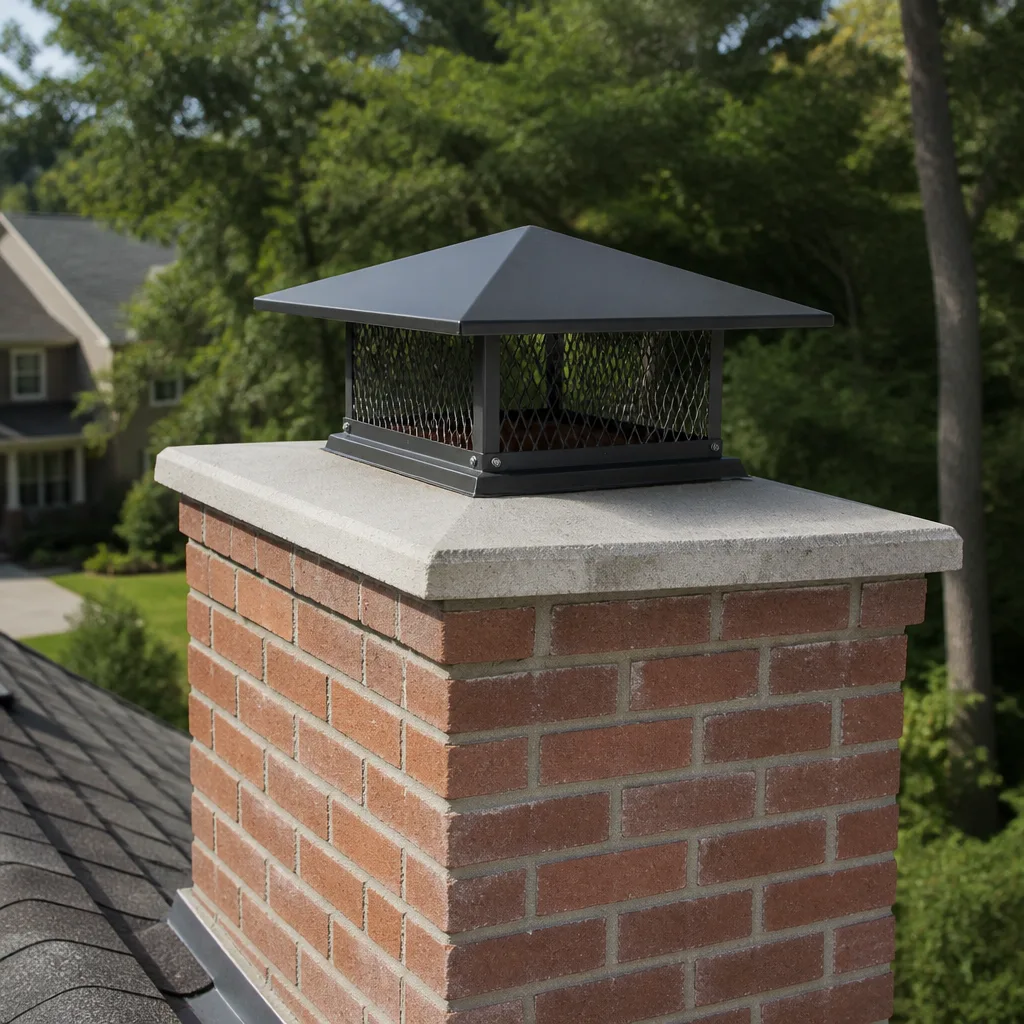 Caps & crowns
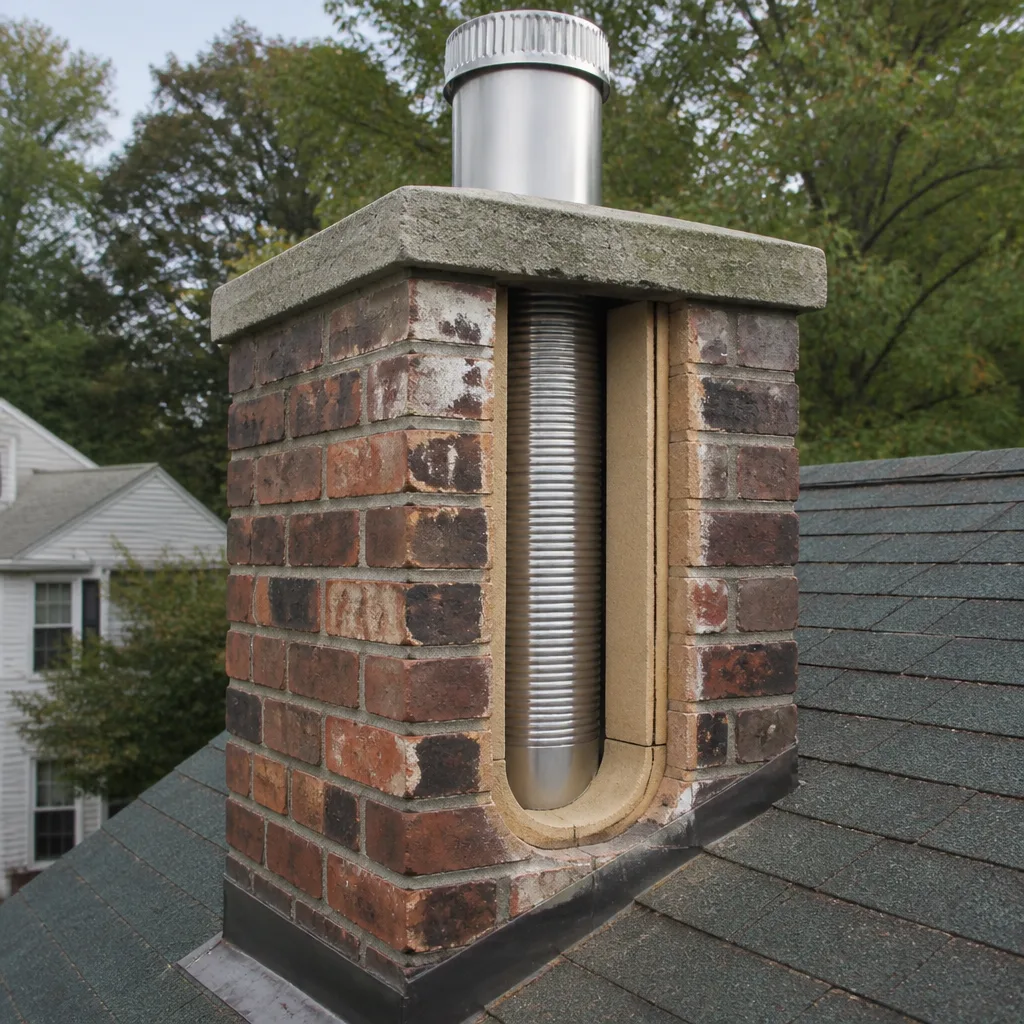 Flue relining
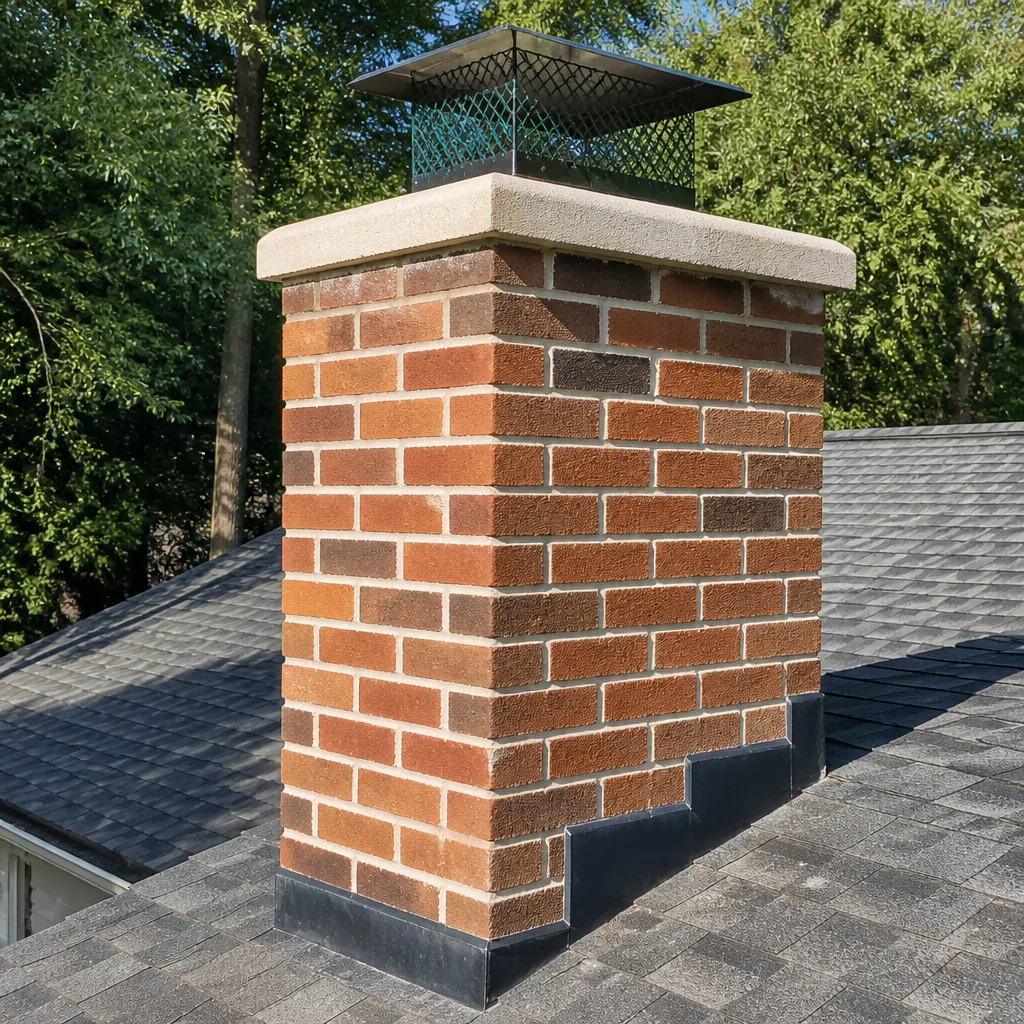 Masonry repair
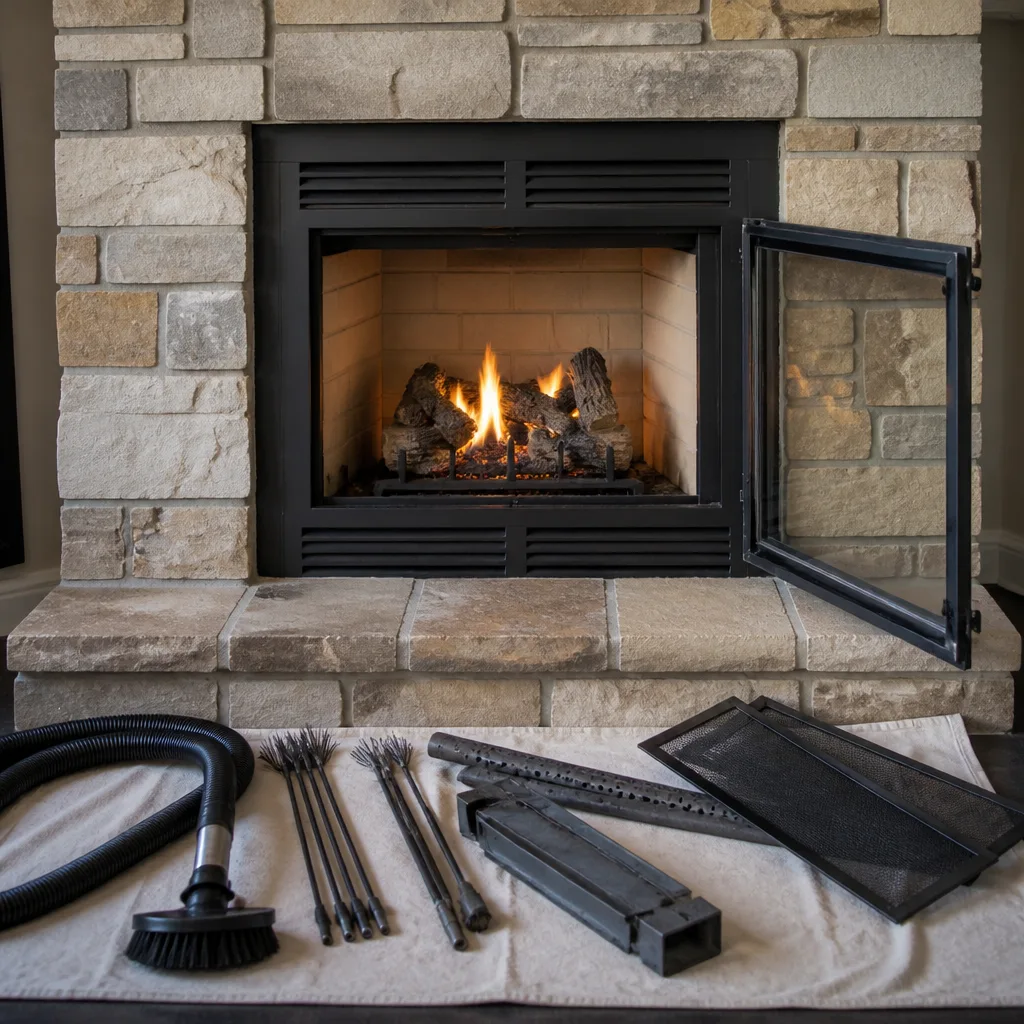 Gas fireplace service
Level 1 sweep and inspection to the NFPA 211 annual standard - flue, crown, cap, and flashing checked and photographed
Chimney sweep logs do not sweep chimneys. They loosen some creosote - which then falls where a brush and vacuum still have to collect it.
DIY vs Professional Chimney Cleaning: The Sandy Homeowner’s Decision Guide
A chimney brush removes soot. It doesn’t tell you that the tile liner section behind your smoke chamber has a hairline crack that’s been leaking combustion gases into your wall cavity for two seasons. That gap between “cleaned” and “inspected and cleaned” is where fire risk actually lives, and it matters more in Sandy than in most places because of how hard local fireplaces work through a long, cold winter. In this guide we’ll walk through what a brush kit can honestly accomplish, where DIY cleaning becomes a liability, what a professional brings that changes the diagnostic picture, and how to build a middle-ground routine that keeps your chimney safe between annual visits. This is written for Sandy homeowners who want the right answer, not the cheapest one.
Quick Answer
DIY chimney cleaning is a reasonable supplement for light-use fireplaces and gas logs with minimal deposits, but it cannot replace an annual professional sweep and inspection. A brush only removes what it can reach and feel, while a professional uses cameras, draft measurement, and smoke chamber access to find the cracks, gaps, and creosote glazing that a brush will never show you. In Sandy’s heavy-use climate, the inspection is the part that protects your home.
Styles & brands we work with
- Sweep & inspection
- Caps & crowns
- Flue relining
- Masonry repair
- Gas fireplace service
Table of Contents
- What DIY Brush Cleaning Actually Accomplishes
- What a Brush Structurally Cannot Evaluate
- The Equipment a Professional Brings to a Sandy Chimney
- Honest DIY Scenarios: When Self-Cleaning Makes Sense
- Rooftop Access in Sandy: Pitch, Height, and Winter Ice
- A Middle-Ground Framework: DIY Habits, Professional Baseline
- The Real Cost Picture of DIY vs Professional Cleaning
- How to Use Year-Round Chimney Habits as a Supplement
What DIY Brush Cleaning Actually Accomplishes
A chimney brush does one job well: it scrapes loosened soot and soft, flaky creosote off the flue walls. If you run a hot fire regularly and your fireplace burns clean, a brush kit can knock down the light deposits that build up in the first few feet of the flue. For gas log sets and fireplaces used only a handful of times each season, the deposits are usually minimal, and a brush pass can be a sensible maintenance touch-up.
What the brush does not do is equally important. It removes material it can physically reach and feel with the brush head. On a straight flue it can get most of the way up, but the angled sections, the smoke chamber above the damper, the top of the firebox, and the corners near the flue collar tend to collect deposits that a brush sweeps right past. Those are exactly the areas that build up hardest in a Sandy home where the fireplace runs through a long, cold winter with dense, resinous smoke.
Creosote is the real variable. It comes in three grades, and the difference matters:
- First-degree creosote is a flaky, dusty soot that brushes off easily with standard tools.
- Second-degree creosote is a hardened, crusty layer that clings and requires more aggressive scraping.
- Third-degree creosote is a glazed, tarry, glass-like coating that bonds to the flue and can’t be removed by a brush at all – it has to be chemically treated or scraped with rotary tools.
Most homeowners can identify a light brush of first-degree deposits. Very few can tell the difference between second-degree creosote and a full glazed third-degree layer from the firebox looking up. That distinction is the whole reason a professional sweep is worth doing annually. It isn’t a knock on your ability to run a brush; it’s a knock on what a brush can tell you.
What a Brush Structurally Cannot Evaluate
A brush cannot inspect anything. That’s not a criticism of you or your tools; it’s a statement about what a brush does. It sweeps. It does not measure, photograph, or test. The parts of a chimney system that fail most often are the parts you can’t see from the firebox, and those are exactly the parts a brush never touches.
Here’s what a brush pass skips over:
- Tile liner cracks. A hairline crack in a flue tile can leak combustion gases into the wall cavity or attic. It looks fine from the firebox. It looks fine to a brush. It only shows up when a camera or a trained eye traces the full flue.
- Mortar joint deterioration. The mortar between flue tiles can flake and crumble. A brush removes the loose bits but doesn’t assess the structural condition of the joint itself.
- Smoke chamber integrity. The smoke chamber above the damper is a corbelled, angled chamber that most brushes can’t fully reach. Cracks and gaps in the smoke chamber parging are a common source of hidden leaks and draft problems.
- Flue offset or misalignment. Some chimneys have an offset or jog where the flue changes direction. A brush can pass it, but it also collects deposits on the bypass shelf that only an inspection with a camera reveals.
- Crown and flashing condition. The crown is the concrete cap at the top of the masonry chimney. A crack in the crown lets water in, and water is the slow killer of a chimney. You can’t evaluate the crown from the firebox.
- Draft adequacy. A chimney can be clean and still draft poorly. Draft needs to be measured, not guessed, and that requires a gauge.
In a Sandy home that runs the fireplace through the winter, this matters more than it would in a mild climate. More fires mean more thermal cycling, and thermal cycling is what opens cracks in tile and mortar over time. The chimney that gets a clean brush every year and never gets inspected is the chimney most likely to surprise its owner.
The Equipment a Professional Brings to a Sandy Chimney
It’s tempting to think the difference between you and a professional sweep is a longer brush. It isn’t. A professional sweep brings equipment that changes the diagnostic picture, not just the reach of the cleaning pass.
The core professional kit includes:
- Inspection cameras and video scopes. A camera traces the flue from the firebox to the top and shows the condition of the tile liner, mortar joints, and the smoke chamber. The homeowner sees the same footage the technician does, which is why the inspection becomes a shared finding rather than a claim.
- Draft gauges. Draft is measured at the firebox and sometimes at the flue collar. A draft gauge tells you whether the chimney is pulling adequately, which is separate from whether it’s clean.
- High-intensity lighting. Much of the flue interior is invisible to a flashlight beam from the firebox. Professional lighting reduces the number of dark corners where deposits and cracks hide.
- Smoke chamber access tools. The smoke chamber requires special handling. Getting into it means specific angles, specific brushes, and often resurfacing parging after cleaning to restore the smooth surface.
- Rotary and chemical tools for glazed creosote. Third-degree creosote doesn’t respond to a standard brush. Rotary chains and approved chemical treatments are what break it down without damaging the flue tile.
That last point is where the professional answer often goes further than the DIY one. If a Sandy chimney has a damaged or heavily glazed liner, the fix isn’t always a full relining job. HeatShield ceramic resurfacing can restore qualifying liners without full replacement, which is a material most sweep-only companies don’t carry. A DuraFlex flexible liner system is another option when the flue configuration simply won’t fit a rigid liner. The point is that a proper inspection opens up repair choices that a brush-and-forget routine never sees.
Honest DIY Scenarios: When Self-Cleaning Makes Sense
We’re not here to talk you out of ever touching your chimney. There are legitimate scenarios where a homeowner-run brush cleaning is a reasonable supplement to professional service, and it’s worth being honest about them.
Light seasonal burns. If you burn a fire a handful of times across the season and your flue shows only light first-degree soot, a brush pass can be a sensible occasional touch-up. You still want an inspection on a regular cadence, but the interim brushing isn’t a problem.
Gas log sets with minimal deposits. Gas logs produce much less soot and creosote than wood fires. A gas fireplace with minimal deposits can go longer between full professional sweeps, and a homeowner can keep an eye on the firebox between visits without risking much.
Between annual professional sweeps. Some Sandy homeowners like to brush their own flue mid-season, especially if they burn heavy in one stretch. That’s fine as a supplement, provided the annual professional sweep and inspection still happens.
Where DIY becomes a liability is here: heavy wood burning with visible buildup, any chimney that hasn’t been serviced in years, any chimney with a known liner issue, any chimney that has had a previous chimney fire, and any fireplace that produces smoke spill into the room. In those cases, a brush pass can actually make things worse by disguising the problem. Loose soot gets knocked down and the flue looks better from the firebox, but the cracks and glazed creosote sit underneath, unchanged.
Rooftop Access in Sandy: Pitch, Height, and Winter Ice
One of the most underestimated parts of DIY chimney cleaning is getting on the roof safely. Sandy homes tend to have pitched roofs, and the roof pitch isn’t the same from house to house. A modest pitch is manageable with care. A steep pitch is not a casual undertaking, especially with a wet or icy roof.
Add winter conditions and the calculation changes fast. Sandy gets real snow and real freeze-thaw cycles, which means ice on the roof and ice in the gutters. Working on a pitched roof with ice present is dangerous even for people who climb roofs often, and it’s not a reasonable risk for a homeowner who climbs a roof a few times a decade. Falls from roof height are serious injuries, and they’re entirely preventable by not getting up there.
Height is the other factor. Chimneys on taller Sandy homes require a properly set extension ladder, roof anchors or a harness, and someone spotting at the base. A homeowner can improvise all of that, but improvising isn’t the same as doing it safely. A professional sweep brings the right ladder setup, roofing-shoe traction, and experience reading a roof surface before putting weight on it.
The safest DIY habit here is straightforward: leave the rooftop for the professional. Look at your chimney from the ground with binoculars. You can see the crown, the cap, the flashing joints, and obvious damage from the ground, and you can snap a photo if something looks off. Save the roof access for the people who do it as a trade.
A Middle-Ground Framework: DIY Habits, Professional Baseline
The best routine for most Sandy homeowners isn’t “DIY or professional,” it’s both. You handle the low-risk, high-frequency habits year-round, and a professional handles the annual baseline sweep and inspection. That split keeps you engaged with your chimney without asking you to do work that carries risk or that you can’t personally verify.
Here’s the framework we recommend:
- Annual professional sweep and inspection. Once per year, before the first fire of the season, schedule a proper sweep and inspection. This is the baseline that catches what you can’t see.
- Monthly owner visual check. Between professional visits, take a few minutes to look into the firebox with a flashlight and check for loose soot, debris, or obvious cracks. Look at the damper operation. Lift the fire grate and look at the floor of the firebox.
- Ground-level rooftop check. With binoculars, look at the crown and cap once per season. Cracked crown? Missing spark arrestor? Rusted cap? Those are things you can see from the ground and flag for the next inspection.
- Burn clean. Use well-seasoned firewood and burn hot, moderate fires instead of slow smoldering ones. Smoldering fires produce more creosote, and creosote is the fuel for a chimney fire.
- Keep a log. Note the dates of professional visits and what was found. If a repair was recommended, note it. That log is useful if you sell the home, if your insurer asks about maintenance, and for your own memory between seasons.
This middle-ground approach keeps you in the loop on your chimney’s condition without replacing the annual professional service. The professional sweep and inspection is where the real diagnostic work happens, and it’s non-negotiable in a climate where the fireplace runs hard through the winter.
The Real Cost Picture of DIY vs Professional Cleaning
DIY cleaning has a low upfront cost. A brush kit and rods run a modest amount, and the labor is your own time. That’s the honest answer on cost. It’s also not the full picture, because the DIY price doesn’t include the part that actually protects your home: the inspection.
Professional cleaning bundles the sweep and inspection together, and that’s where most of the value sits. A sweep alone is one part of the service. The inspection is the part that finds the crack, the glazed creosote, the failing crown, or the smoke chamber gap that could become a real repair. When a professional inspection surfaces a problem, the fix can be scoped accurately with the homeowner’s own eyes on the camera footage, not a guess.
What professional service unlocks that DIY doesn’t:
- HeatShield ceramic resurfacing for qualifying liner damage, which can restore a chimney without a full reline.
- DuraFlex flexible liner systems for flue configurations that won’t accept a rigid liner.
- Crown and cap installation using professional-grade Famco and Copperfield components.
- Smoke chamber restoration after cleaning, which most brush-only routines never address.
- A documented inspection report you can reference for insurance, real estate, or your own maintenance planning.
The cost question is really a coverage question. DIY covers the removed soot. Professional service covers the removed soot plus the diagnosis. In Sandy’s burn climate, the diagnosis is the part that matters most.
How to Use Year-Round Chimney Habits as a Supplement
If you want to make DIY useful, use it as a set of habits, not as a replacement for the annual professional visit. The habits below are low-risk, high-value, and they make you a better partner to your chimney professional when the annual visit comes around.
Check the firebox monthly. A flashlight beam into the firebox shows you what you can actually see: the firebrick condition, the damper operation, the ash bed, and whether anything has fallen into the firebox that shouldn’t be there.
Watch your smoke. If your fireplace suddenly spills smoke into the room, smokes when it didn’t before, or smells strongly of creosote, that’s a signal to call for an inspection rather than brush it and hope.
Season your firewood. Wet wood produces more creosote. Firewood should be split, stacked, and dried before it burns. This is the single biggest DIY lever you have on creosote production.
Avoid smoldering fires. Dampers choked down for a slow overnight burn produce more creosote than a hot, moderately sized fire. Running a hot fire to finish the burn reduces deposits.
Look from the ground. Binoculars cost less than a roof fall. Look at the crown and cap from the ground each season and flag anything that looks cracked, rusted, or missing.
Know the signs of a chimney fire. A chimney fire can sound like a low roar, a popping, or a rushing freight-train noise, and it can produce dense smoke from the top of the chimney. If a chimney fire is suspected, get everyone out, call the fire department, and do not use the fireplace again until a professional inspects it. This is not the moment for a brush kit.
These habits are the safe, sensible DIY side of chimney care. They keep you engaged with your chimney, they catch obvious problems early, and they make the annual professional visit far more productive when it happens.
Common Mistakes to Avoid
- Brushing without inspecting. A brush removes soot but tells you nothing about the condition of the flue. If you brush and never inspect, you can sweep away the evidence and leave the actual problem in place.
- Climbing an icy roof. Sandy’s freeze-thaw winters put ice on roofs and gutters. A pitched roof with ice on it is not a safe DIY workspace regardless of experience.
- Skipping the annual inspection because you brush. Annual brushing feels like maintenance, but the inspection is the part that catches cracks, crown damage, and liner issues. Skipping it is the single most common mistake we see in Sandy.
- Ignoring the smoke chamber. The smoke chamber above the damper is the part of the chimney most likely to be missed by a DIY cleaning pass. It’s also the part that collects the hardest-to-reach deposits and hides the most cracks.
- Burning wet or green firewood. Wet wood produces more creosote, which makes second- and third-degree buildup more likely. Season your wood and burn hot, moderate fires.
- Treating glazed creosote as soot. Third-degree glazed creosote looks like a hard, tarry resin and won’t come off with a standard brush. Brushing it bright is not the same as removing it.
- Deferring repairs indefinitely. A cracked crown lets water in, and water damage compounds every season. If a professional inspection finds a crown or flashing issue, the right move is to address it rather than delay it for a warmer month that never quite arrives.
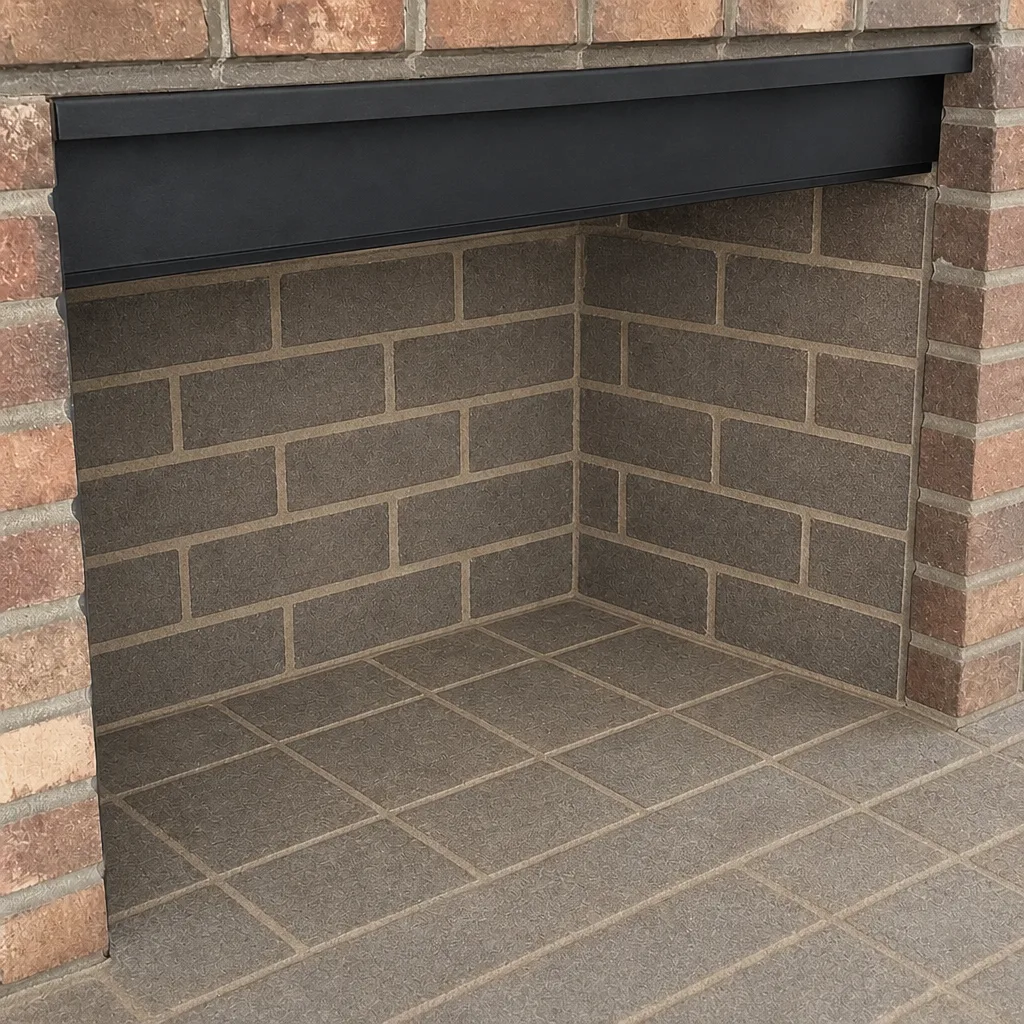
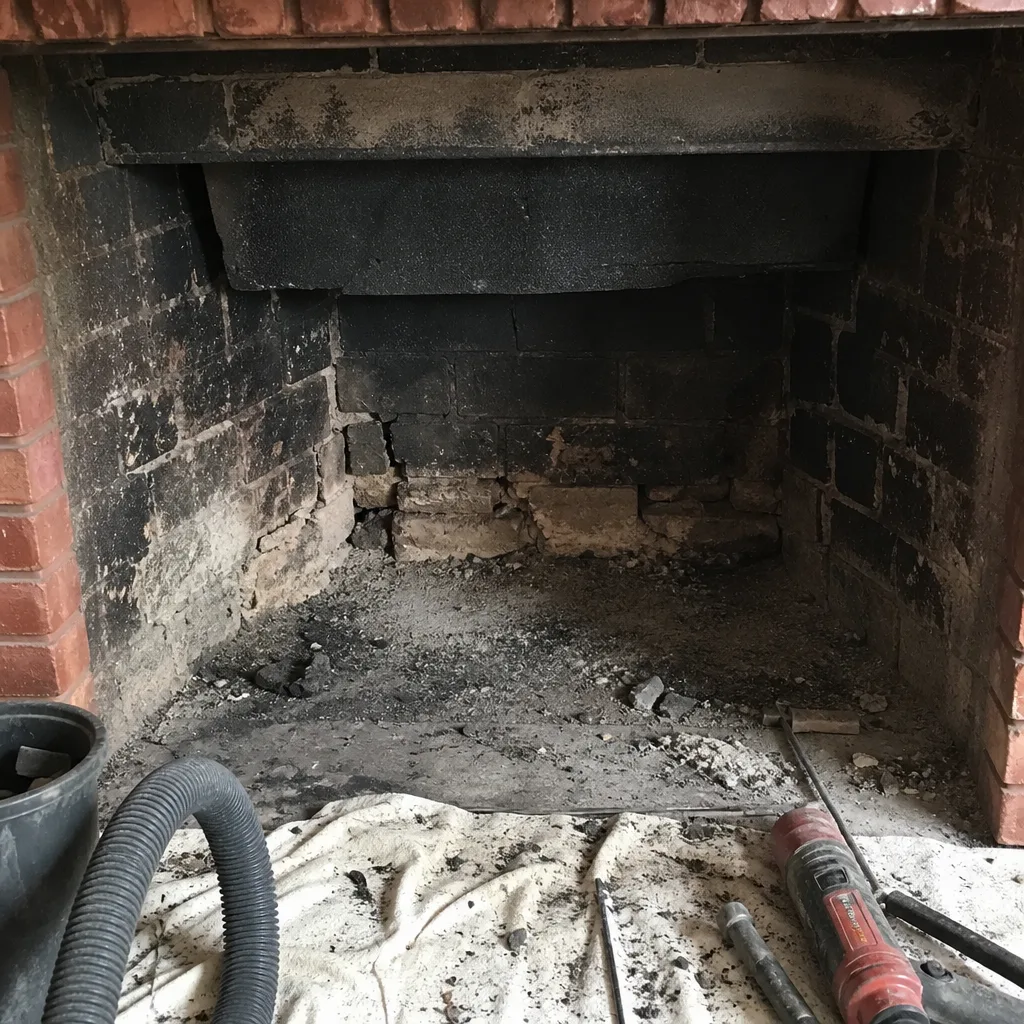
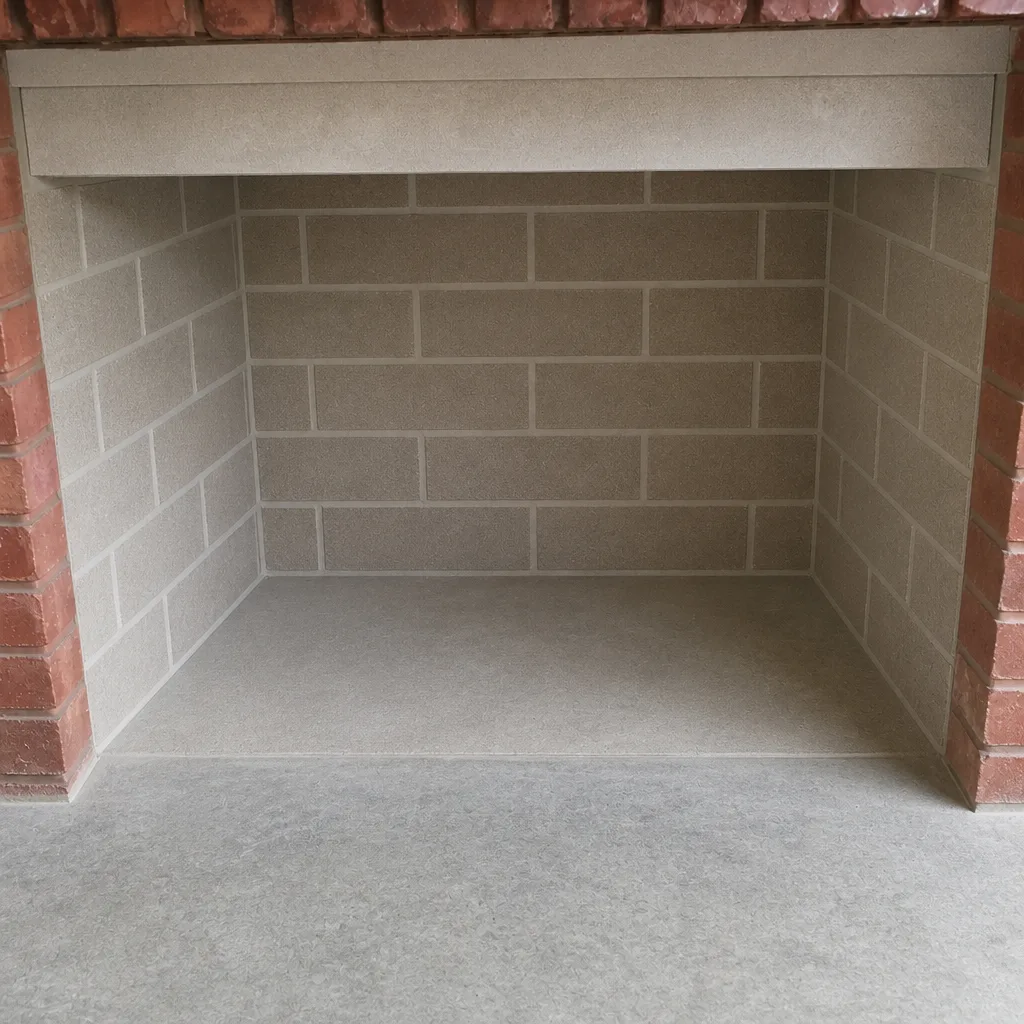
See the difference
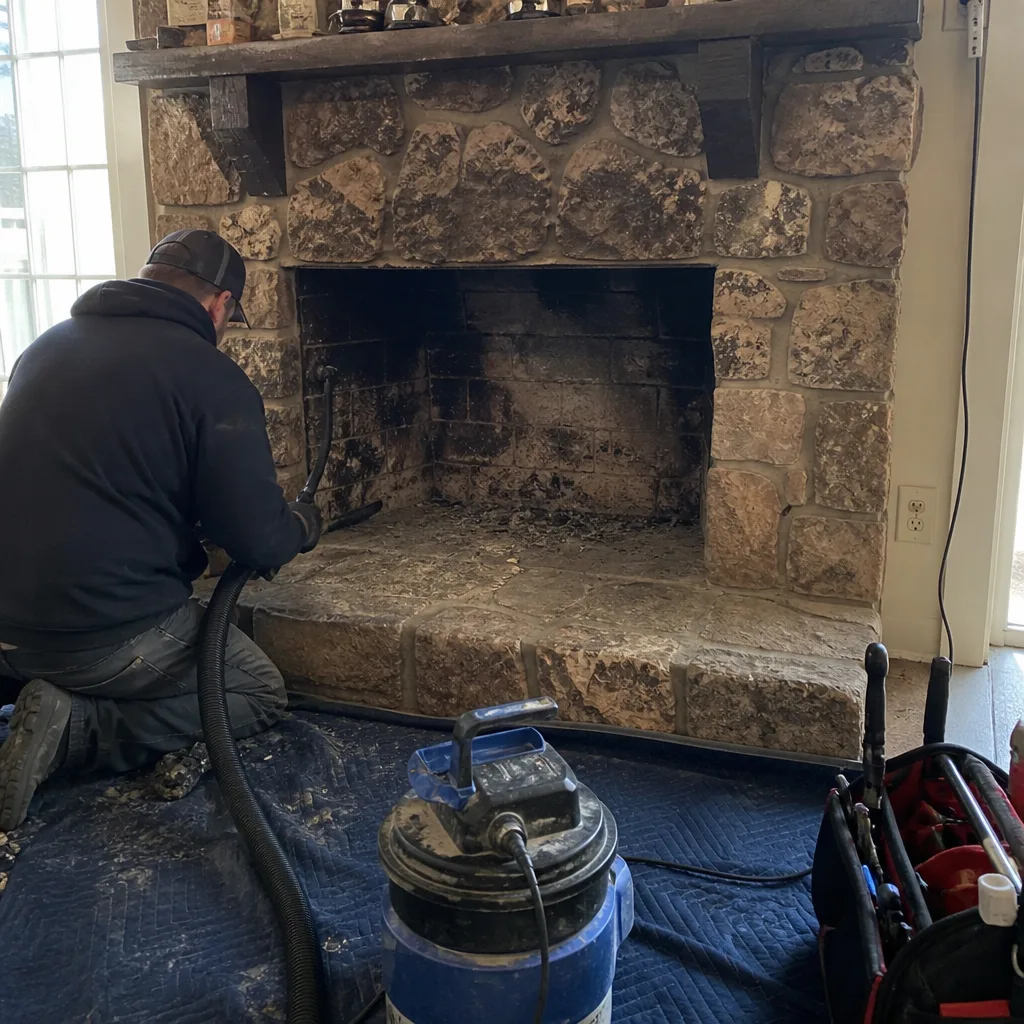 Before
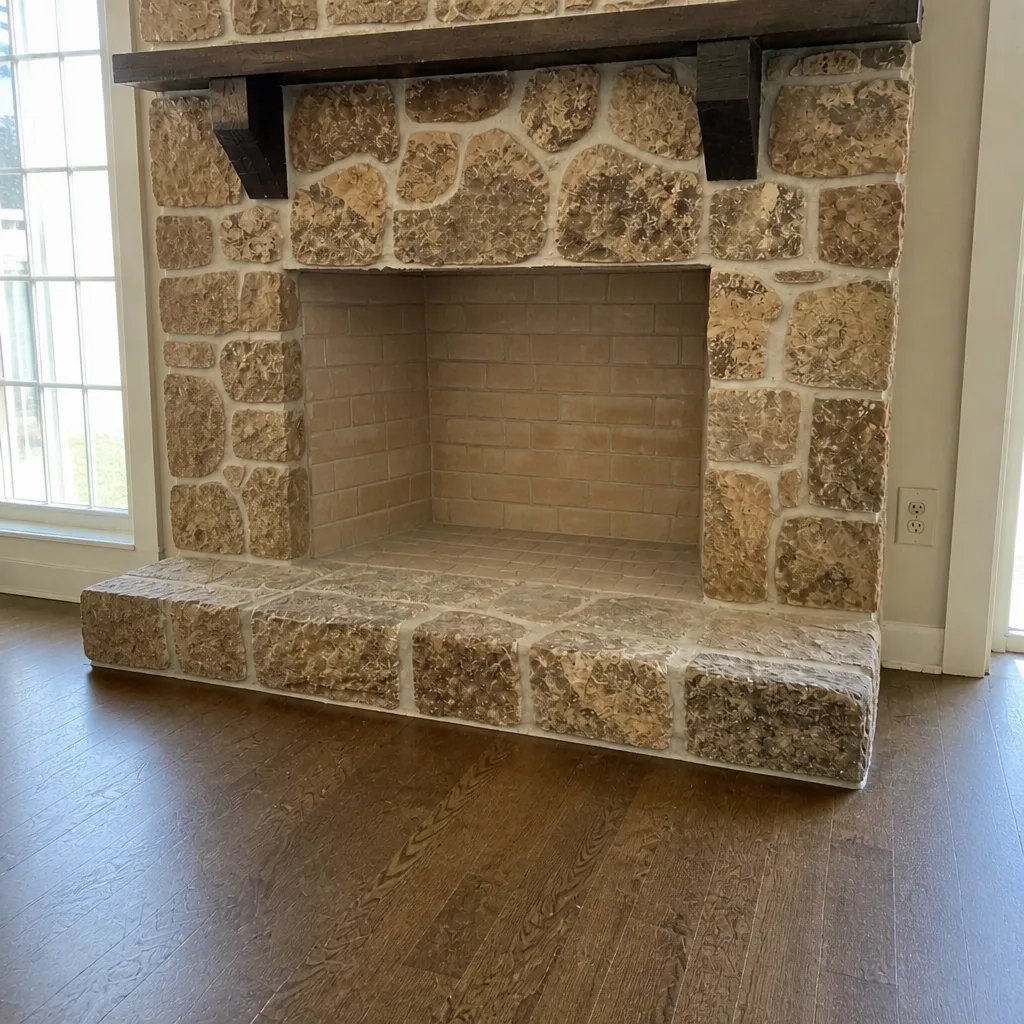 After
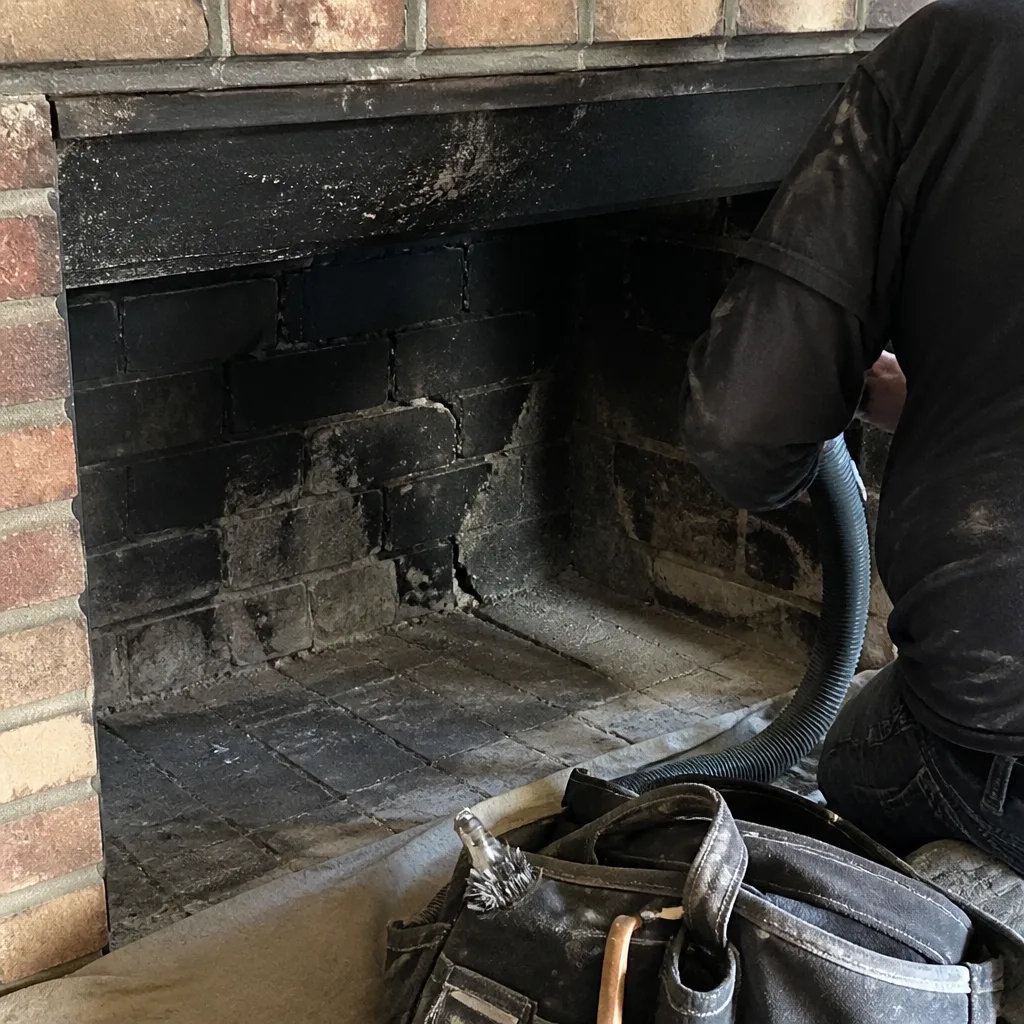 Before
 After
 Before
 After
When to Call a Professional
Call a professional sweep for these specific situations: any chimney that hasn’t been swept or inspected in over a year; any chimney that has had a prior chimney fire; any fireplace that spills smoke into the room; any visible crack in the crown or cap; any chimney with an unlined or damaged liner; any conversion from wood to gas or vice versa; any home purchase where the fireplace inspection has not been done; and any homeowner who simply can’t safely access the roof. Those are the moments when the professional sweep plus inspection changes the outcome.
A formal inspection is also a standalone service worth scheduling if you’re insuring the home, selling it, or reactivating a neglected fireplace. You want to know exactly what you’re working with before the first fire of the season. We inspect it, we explain it, and we fix it right when your chimney needs work.
Sandy Chimney Sweep offers free estimates in Sandy. Call (855) 658-5256. We answer 24/7. Fast dispatch from 7am to 7pm, Sunday through Friday. Our technicians have up to 9 years of experience, and we work with professional-tier brands like HeatShield, DuraFlex, Olympia Chimney, and Gelco so the work is done with materials the trade actually relies on. Whether you need chimney sweep service, a standalone inspection, or fireplace repair, we handle the full scope from one specialist.
Frequently Asked Questions
You can run a brush through a lightly soiled flue, but you can’t replicate the inspection that a professional provides. In Sandy’s heavy-use climate, the inspection matters more than the brush pass, and that’s the part DIY misses. Call (855) 658-5256 for an exact quote on a professional sweep and inspection; estimates are free.
Once per year for most Sandy homes that use the fireplace regularly, and more often for heavy wood burners. The annual sweep is paired with an inspection that catches issues the sweep alone won’t find. If it’s been a season or more, book the sweep before the next fire. Call (855) 658-5256 to schedule.
A professional sweep uses cameras, draft gauges, high-intensity lighting, and smoke chamber access tools to evaluate the whole chimney, not just the part the brush reaches. The inspection is the part that finds cracks, glazed creosote, crown damage, and liner issues. Call (855) 658-5256 for a sweep plus inspection estimate.
DIY cleaning is not a safe starting point for a chimney that hasn’t been professionally evaluated, because you can remove soot and miss a serious structural issue. It’s worth having a professional inspection as your baseline first, then using DIY as a supplement. Call (855) 658-5256 and we’ll scope the inspection honestly.
A skipped inspection means cracks, crown damage, and liner glazing can go unnoticed until they cause a real problem, including smoke spill, water damage, or a chimney fire. The inspection is the part of the annual service that catches those issues early. If it’s been a while, call (855) 658-5256 to schedule.
Pricing depends on the chimney configuration, the level of deposits, and whether repairs are needed, so we set a written estimate per job after inspection. The estimate is free, and it’s built from what we actually find, not a flat guess. Call (855) 658-5256 for your free estimate.
Often yes, when the damage qualifies for HeatShield ceramic resurfacing. HeatShield restores a qualifying liner without a full relining job, and for configurations that need a new liner, a DuraFlex flexible liner system can fit complex flues that rigid liners can’t. Call (855) 658-5256 and we’ll assess your liner in person.
Get everyone out of the house, call the fire department, and don’t use the fireplace again until a professional has inspected it. A brush kit is not the right tool after a chimney fire; the chimney needs a full inspection for structural damage and glazed creosote. Call (855) 658-5256 once the fire department clears the house.
The Bottom Line
DIY chimney cleaning has a legitimate place as a supplement for light-use fireplaces, gas logs, and well-maintained chimneys with minimal deposits. It has no place as a replacement for an annual professional sweep and inspection, because a brush removes soot but can’t evaluate cracks, crown damage, liner glazing, or the smoke chamber. In Sandy’s burn climate, where fireplaces work hard through a long winter, that inspection is where fire safety actually lives. Hire the professional for the annual sweep and inspection, keep the DIY habits for the months in between, and keep an eye on your chimney from the ground. When it’s time for the annual visit, we’re one call away.
Contact Us
Whether you’re reactivating a fireplace after years of neglect, buying a Sandy home with a chimney you’ve never had inspected, or just keeping your existing fireplace on its annual schedule, we’re here to help. From the firebox to the crown, one specialist handles it all: sweeping, Sandy Chimney Sweep inspections, chimney cap & crown work, fireplace repair, and structural chimney repair. We use professional-grade materials from DuraFlex, HeatShield, Gelco, Olympia Chimney, Famco, and Copperfield, and we stand behind the work with a satisfaction guarantee.
Call (855) 658-5256 for a free estimate. We answer 24/7. Fast dispatch from 7am to 7pm, Sunday through Friday. Know exactly what you’re working with before the first fire of the season.
Written by the team at Sandy Chimney Sweep.