
Last updated November 25, 2026
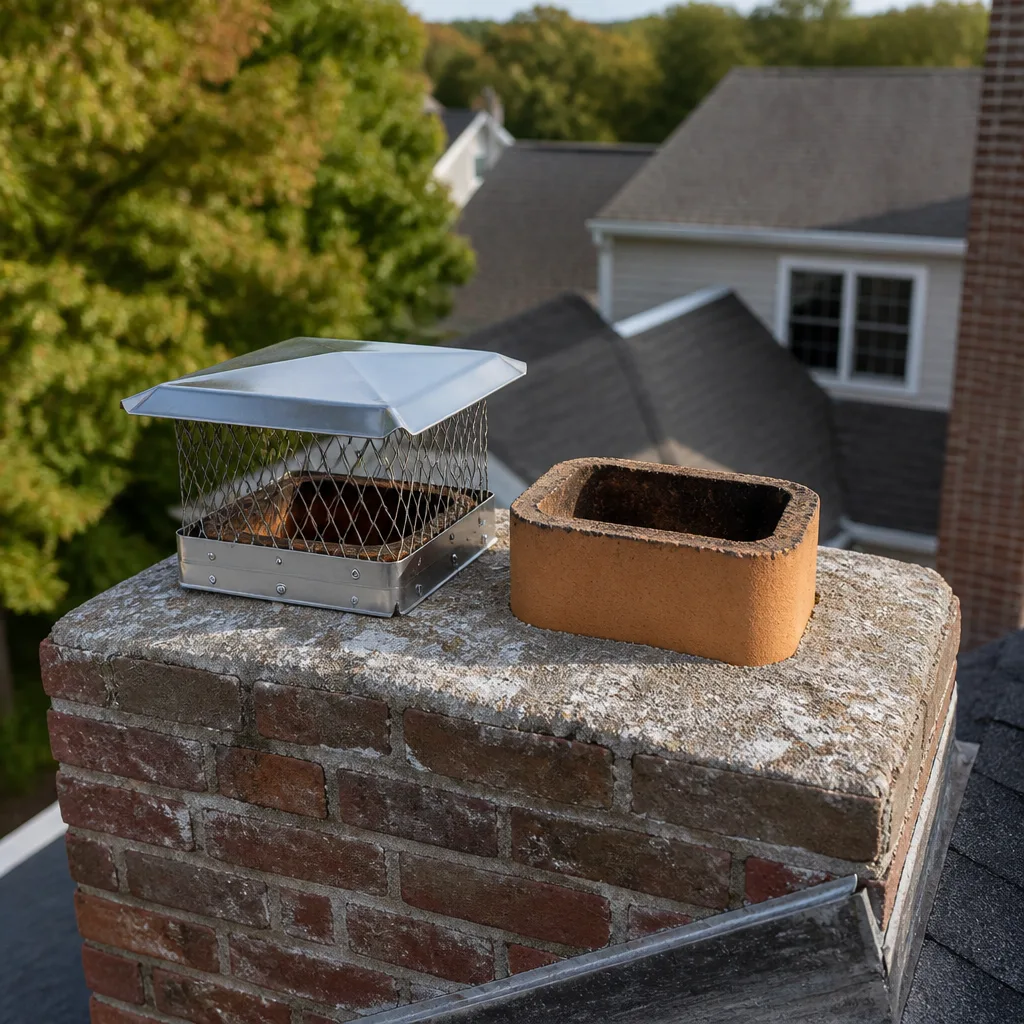 Sweep & inspection
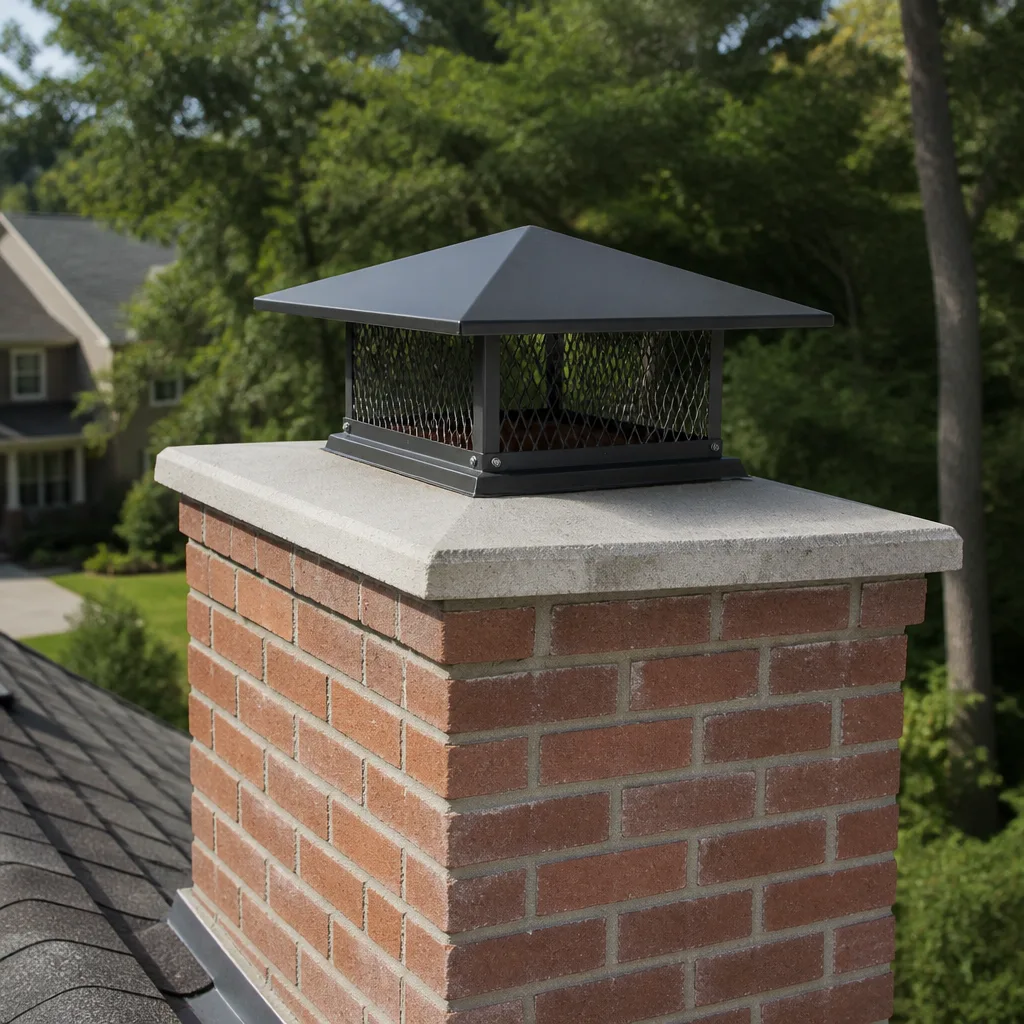 Caps & crowns
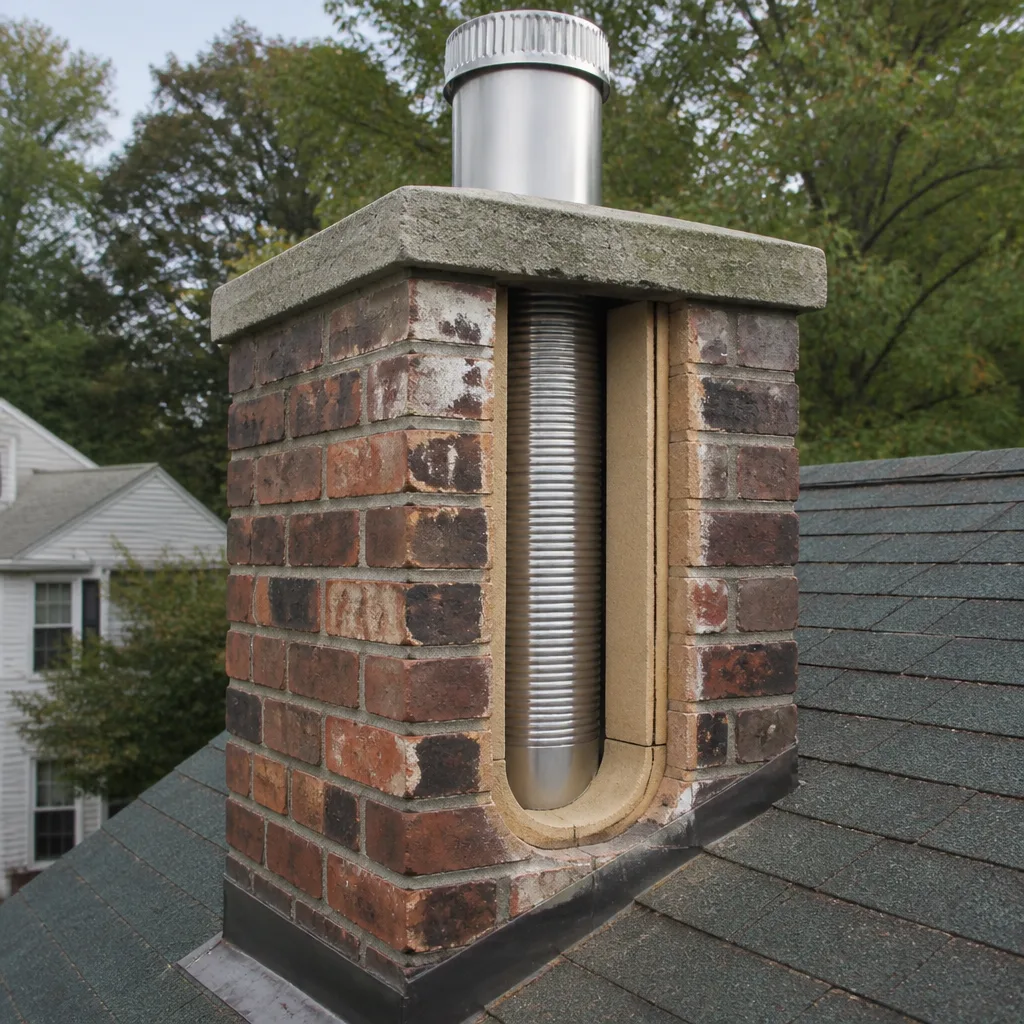 Flue relining
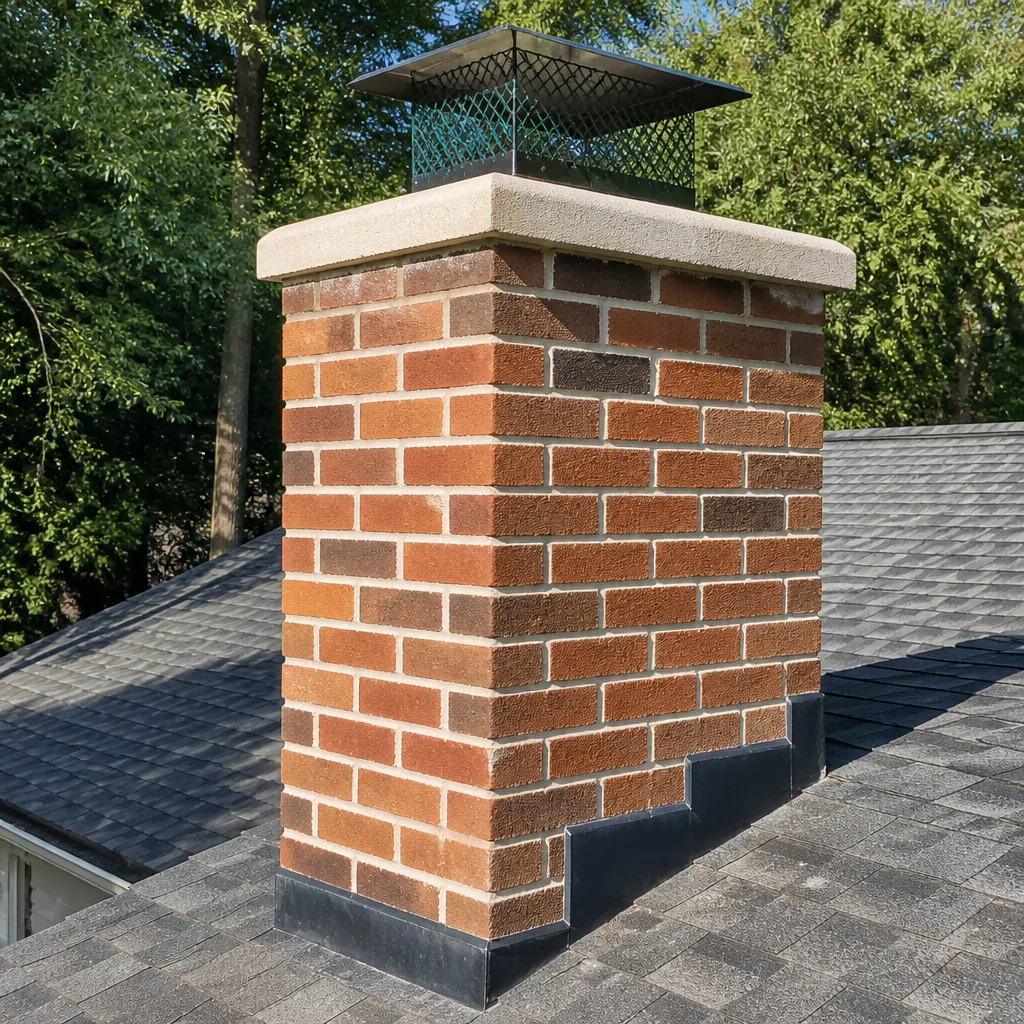 Masonry repair
 Gas fireplace service
Level 1 sweep and inspection to the NFPA 211 annual standard - flue, crown, cap, and flashing checked and photographed
Chimney sweep logs do not sweep chimneys. They loosen some creosote - which then falls where a brush and vacuum still have to collect it.
Chimney Sweep Maintenance Checklist for Sandy Homeowners
The standard “inspect before winter” advice sounds right until you realize what it actually means in Sandy. Schedule a sweep in October and you’ll likely be waiting behind every other homeowner who read the same advice, with your first fire still weeks away and no clear idea whether the chimney is ready. The smarter approach is to spread chimney maintenance across the whole year, timed to what Sandy’s climate actually does to masonry and metal. This guide lays out a month-by-month checklist built around Sandy’s burn season, hard freeze-thaw cycles, and summer monsoon moisture, with clear lines between what you can check yourself and what needs a trained sweep.
Quick Answer
A chimney maintenance checklist for Sandy homeowners should follow the local calendar, not a generic national template. That means scheduling your annual sweep in late spring or summer (not the October rush), inspecting the cap and crown before hard freezes arrive, and rechecking masonry after each freeze-thaw cycle through winter and early spring. Self-checks cover the damper, firebox visuals, and the cap from ground level; flue cleaning, liner assessment, and any repair work belong to a trained sweep.
Styles & brands we work with
- Sweep & inspection
- Caps & crowns
- Flue relining
- Masonry repair
- Gas fireplace service
Table of Contents
- Why Sequencing Matters in Sandy’s Climate
- Month-by-Month Chimney Checklist for Sandy
- What You Can Check Yourself vs. What Requires a Certified Sweep
- The Chimney Cap and Crown Checklist (Separate from the Flue)
- Masonry Indicators to Watch After Sandy’s Hard Freezes
- Documenting Chimney Condition Year Over Year
- Common Mistakes to Avoid
- When to Call a Professional
Why Sequencing Matters in Sandy’s Climate
Sandy sits at the base of the Wasatch Range, and that geography shapes the chimney calendar in ways a national checklist misses. Winters bring repeated freeze-thaw cycles, not a single long freeze. Water soaks into masonry mortar during a warm afternoon, then expands overnight when temperatures drop below freezing, then drains as it thaws the next day. Do that hundreds of times across a winter and the mortar joints begin to recede, brick faces begin to spall, and the crown – the concrete cap on top of the chimney – starts to crack. The damage builds slowly enough that a homeowner will not notice it between October and April unless they’re deliberately looking for it.
Summer adds the second pressure: monsoon moisture. Afternoon thunderstorms roll in from July through September and pound the chimney from above. Any gap in the cap, any crack in the crown, any missing mortar becomes an entry point for water that won’t dry out before the first freeze arrives. What a lot of homeowners don’t realize is that the August storms and the December freezes act on the same vulnerabilities; the damage compounds rather than resets.
Burn season is the third piece. Most Sandy households first light the fireplace somewhere between late October and Thanksgiving, then burn through March or into April. That gives you a clean rhythmic window: sweep in late spring after the last fire, inspect and repair through summer, and verify before the first freeze. That sequence lets you find problems while there’s still time to fix them without paying for urgency.
Where sequencing pays off most is scheduling. When everyone calls in October, the calendar is packed and inspections crowd out the slow follow-up that repair work needs. When you call in May or June, the sweep has room to inspect properly, order the right part if something’s needed, and schedule the follow-up without a rush.
Month-by-Month Chimney Checklist for Sandy
The right way to think about this is as a rolling cycle that repeats every year, not a one-and-done list. Here’s how we’d sequence it for a typical Sandy home that burns regularly through winter:
January through March (Mid Burn Season)
- Do a weekly visual of the firebox before each fire: no crumbling mortar between firebricks, no cracked brick faces, no buildup of creosote flakes on the walls.
- Check the damper opens and closes fully every time you light a fire. A damper that sticks open wastes heat; one that sticks closed is a carbon monoxide risk.
- After each hard freeze, look at the exterior chimney for new cracks in the crown or white staining on the brick (more on that below).
- Listen for changes in how the fire drafts. A fire that suddenly smokes into the room, when it didn’t before, is a signal to stop burning until the flue is inspected.
April through May (Post-Season Sweep Window)
- Book your annual chimney sweep after your last fire of the season, not before the first one. That way the sweep clears the creosote your winter burning produced and you start the off-season with a clean flue.
- Have the flue inspected at the same visit. A camera inspection shows the liner condition you can’t see from the firebox.
- Note any masonry concerns that appeared over winter for follow-up in summer.
June through August (Repair and Prep Window)
- Address any crown cracks, mortar joint recession, or cap damage found in spring inspection. Summer dry weather is when masonry repairs set properly.
- Repair or replace the cap before monsoon season peaks. A cap missing screen or with a bent top lets water and wildlife in.
- Schedule any fireplace repair now – damper rebuilds, firebox repointing, hearth work – so it’s finished before the burn season starts.
September through October (Pre-Season Verification)
- Do a final walk-around of the exterior chimney: cap tight, crown sealed, brick and mortar sound.
- Test the damper through its full range.
- Confirm the flue is clear and the firebox is clean before the first fire.
- If you skipped the spring sweep, get on the schedule now rather than waiting for November.
November through December (First Fires)
- Do a small test fire before committing to a full burn. Watch for smoke rollout, unusual smells, or weak draft.
- Recheck the firebox after the first three or four fires. Fresh cracks appearing in the firebrick are worth flagging immediately.
What You Can Check Yourself vs. What Requires a Certified Sweep
The distinction matters, and it’s the point where a lot of checklists get vague. You can and should look at your chimney with your own eyes throughout the year. You should not try to clean the flue, assess the liner, or inspect the interior of the chimney above the firebox yourself.
Safe Self-Checks
- Damper operation. Open and close the damper fully. It should move smoothly with no grinding, and it should seal completely when closed.
- Firebox visual. Look for cracked firebrick, crumbling mortar between bricks, warped or cracked grate, and heavy creosote flaking on the walls.
- Cap from ground level. With binoculars from the yard, check that the cap is sitting square, the screen is intact, and the top is not dented or missing.
- Exterior masonry. From the ground, scan brick faces for flaking or white staining, and mortar joints for visible gaps or missing chunks.
- Draft test. Light a small fire and watch for smoke rolling into the room rather than up the flue.
Checks That Require a Trained Sweep
- Flue cleaning. Creosote removal requires the right brushes, drop cloths, and knowledge of how much buildup is present and where.
- Liner inspection. You cannot see the inner flue liner from the firebox. Only a camera inspection reveals cracks, gaps, or separation in a liner that has begun to fail.
- Crown and flashing assessment. The crown has to be walked on the roof – or viewed from above – to see cracking that isn’t visible from below.
- Structural assessment. Any question about chimney lean, missing bricks, or mortar recession deeper than the surface needs an onsite evaluation.
Our technicians have up to 9 years of experience, and we’ve learned the split in practice: homeowners catch dozens of small issues with regular self-checks, and a formal inspection catches the ones that are hidden. The two work together. A formal Sandy Chimney Sweep inspection as a standalone service gives you a documented baseline so you know exactly what you’re working with before the first fire of the season, and you’ve got a written record to compare against next year.
The Chimney Cap and Crown Checklist (Separate from the Flue)
Of everything on a chimney, the cap and crown get skipped the most. They’re out of sight, they’re not part of the fire, and until something’s obviously wrong, they don’t feel urgent. That’s exactly backwards for Sandy, where the crown is the roof of the chimney structure and the cap is the roof of the flue.
Think of them as a two-piece watershed. The crown sheds rain and snowmelt off the top of the chimney body. The cap sends water and wildlife past the flue opening. When either one fails, water gets inside the structure and starts the slow process of mortar decay, brick spalling, and eventually rusted dampers and cracked liners – damage that costs far more to fix than the cap or crown replacement would have.
Crown Checklist
- Look for cracks. Even hairline cracks matter in Sandy. Water gets in during a warm afternoon, freezes overnight, and widens the crack a little more.
- Check the overhang. The crown should extend past the brick and slope away from the flue. A crown that’s flush with the brick or sloped the wrong way causes water to pool at the base of the flue.
- Watch for crumbling or separation. A crown that’s separating from the brick courses beneath it needs repair before the next freeze cycle.
- Look for moss or dark staining. Both suggest the crown is holding moisture instead of shedding it.
Cap Checklist
- Confirm the cap is present and square. A missing or tilted cap means rain, snow, and birds have direct access to the flue.
- Check the screen. Screen mesh tears and rusts out. Missing screen openings welcome birds and squirrels.
- Check the mounting. Legs should be firmly attached to the flue tile with no wobble. A cap that shifts in the wind will eventually come off.
- Verify the cap fits the flue. A cap that’s too small leaves a gap; one that’s too big traps moisture.
Our chimney cap & crown work uses Famco and Copperfield components – precision-manufactured venting and chimney parts that hold up to Wasatch winters. Repairing the crown in summer, when the masonry has time to cure in dry weather, is one of the highest-value tasks on the whole checklist.
Masonry Indicators to Watch After Sandy’s Hard Freezes
Masonry damage from freeze-thaw doesn’t announce itself. It shows up as three specific signals, none of which are obvious unless you know what to look for. Walk around the exterior of the chimney after each hard freeze and scan for these:
Spalling
Spalling is when the face of a brick flakes off, leaving a rough, pitted surface. It happens when water gets into the brick, freezes, and pushes the outer face away. On a Sandy chimney, spalling often starts on the south and west faces, where afternoon sun drives moisture in and overnight cold expands it back out. Early spalling looks like a small rough patch; late spalling leaves crumbled brick that no longer protects the structure beneath.
Efflorescence
Efflorescence is the white, chalky powder that appears on brick or mortar when water moves through the masonry and evaporates, leaving dissolved salts behind. A little efflorescence on a chimney that hasn’t been sealed is common. Efflorescence that reappears after cleaning, or that comes with darker staining around the joints, means water is actively moving through the masonry from somewhere – often a failing crown or flashing.
Mortar Joint Recession
Mortar is softer than brick and wears back first. Run a finger along a horizontal joint at eye level. If the mortar surface sits visibly deeper than the brick faces – a quarter inch or more is the point to take note – the joint is receding. Deep recession lets water pool on the joint, freeze, and push the brick above it loose. Repointing (replacing the receded mortar) is a targeted repair that stops the cycle before brick damage begins.
One other indicator worth watching: any visible lean or separation of the chimney from the house. A chimney that leans slightly is generally a structural concern, not a cosmetic one, and it should be evaluated by a professional rather than watched for another season.
Documenting Chimney Condition Year Over Year
A one-time inspection tells you what your chimney looks like today. A documented history tells you how fast it’s changing, and that’s the number that matters when you’re deciding whether a repair is due this year or can safely wait.
Here’s the system we recommend to Sandy homeowners:
- Keep a single chimney folder. Paper or digital, doesn’t matter. Every inspection report, invoice, and photograph goes in it.
- Take photos from the same angles each year. Pick four positions around the chimney base and one wide shot from the street. Same time of year, similar lighting. Comparing year to year is what reveals change.
- Note the date on each photo. A photograph without a date is nearly useless after two years.
- Log the creosote level. Your sweep can tell you roughly how much buildup was present. If it’s consistently moderate, your burning habits are working; if it’s going up year over year, something in the burn routine (wet wood, low draft, restricted air) needs a look.
- Log repair history. What was repointed, when, and with what material. If a repair is holding well after three freeze-seasons, you’ve got an effective solution. If the same spot needs touch-up every spring, the underlying water source hasn’t been solved.
- Mark which items your sweep recommended “watch” on and which were “repair now.” Two years of “watch” turning into “repair” is normal weathering. Two years of “watch” staying flat means you can keep watching.
This is the practical value of a formal inspection as a standalone service rather than a free look tucked inside a sales pitch: you end up with a written assessment you can reference against next year’s, and your insurance company or a future home sale will find it useful. The liners and repair materials we install from brands like HeatShield, Gelco, and DuraFlex are also documented in the same file, which makes warranty and follow-up straightforward.
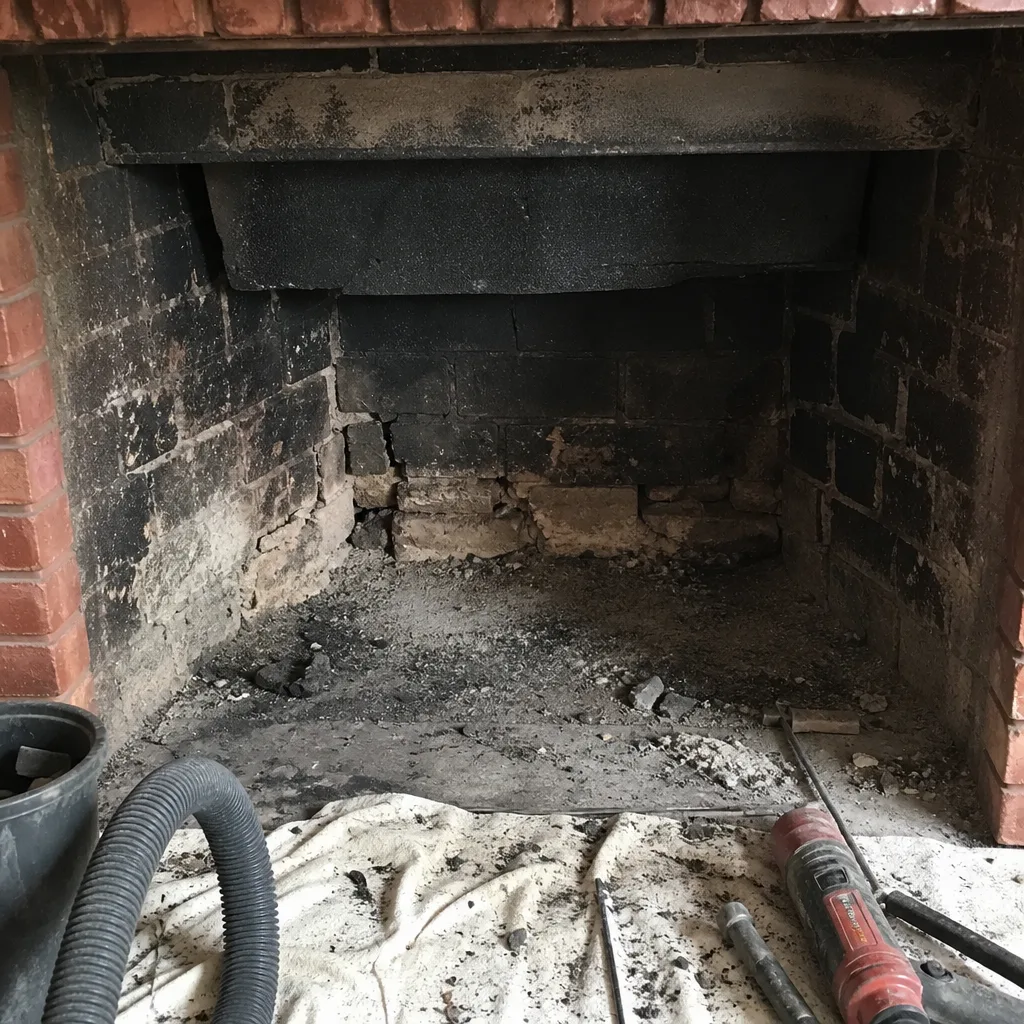
See the difference
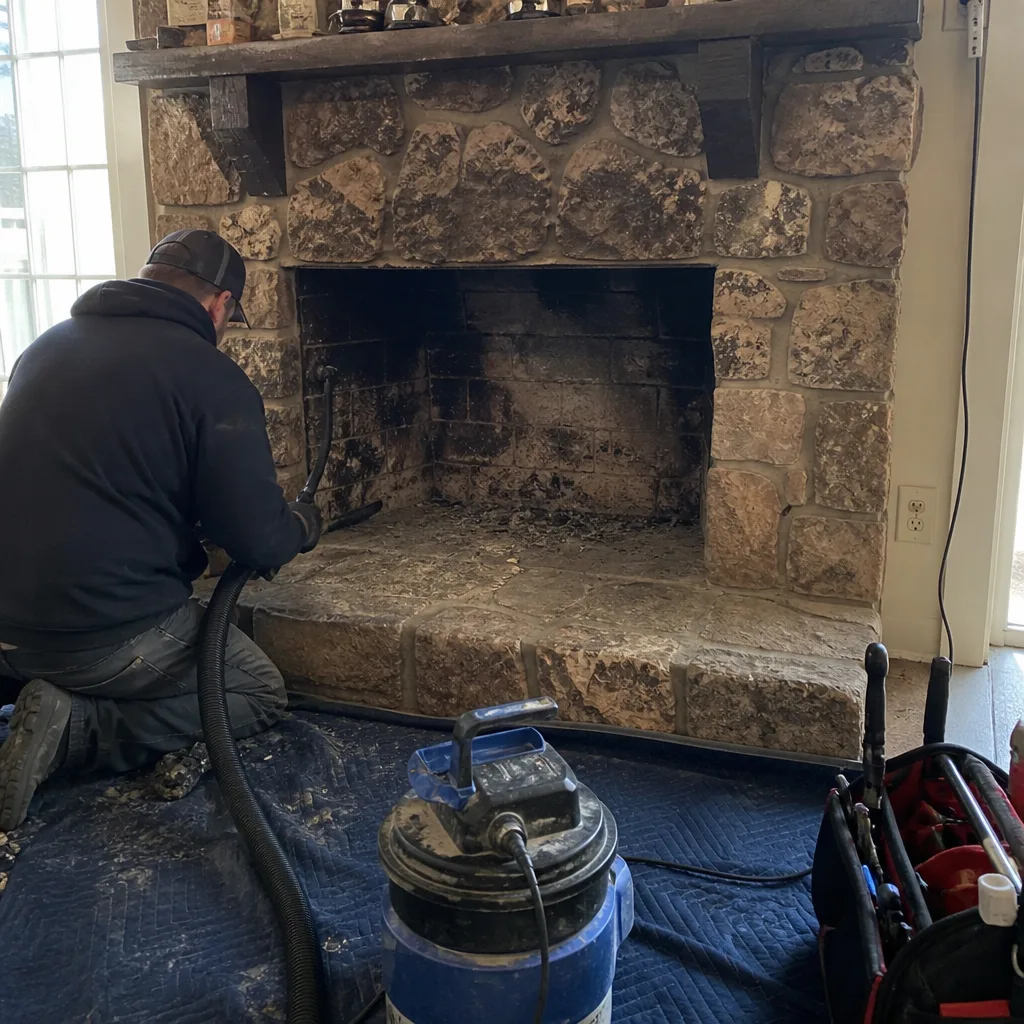 Before
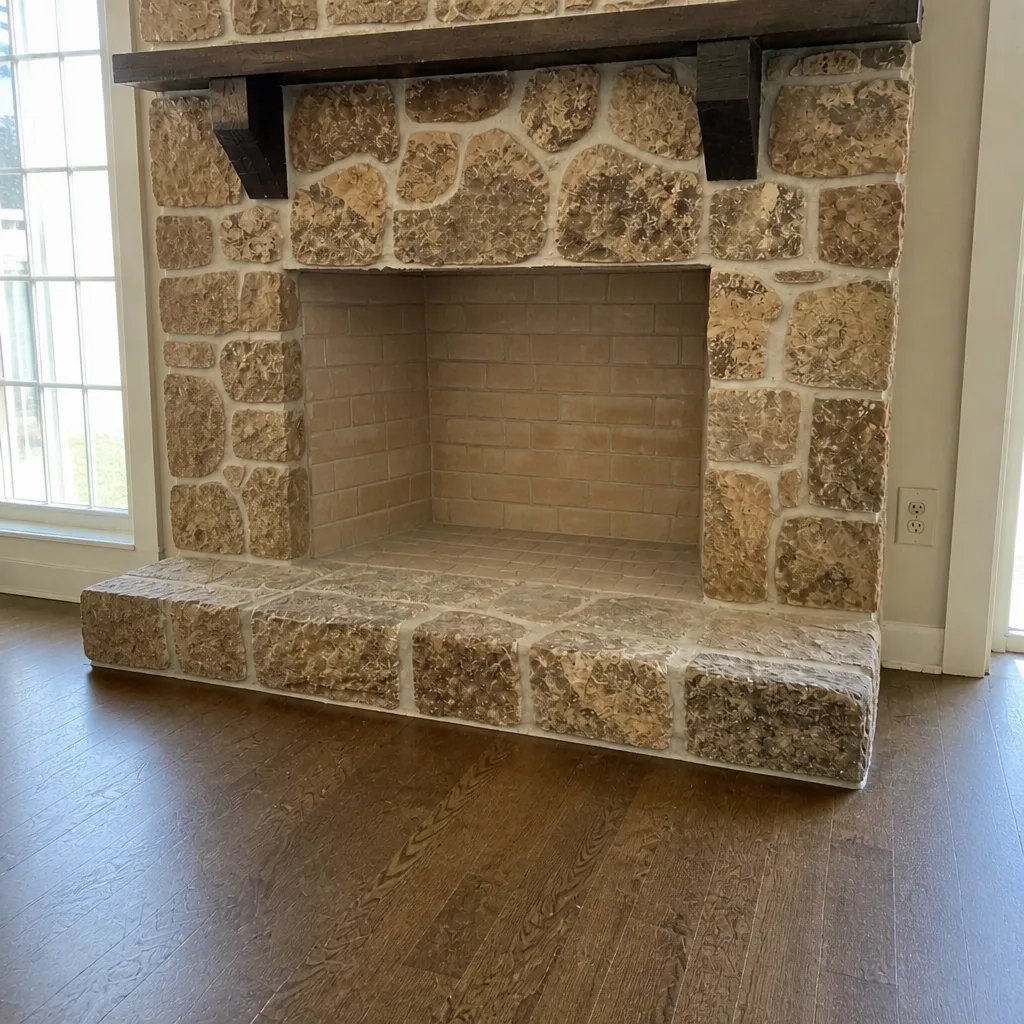 After
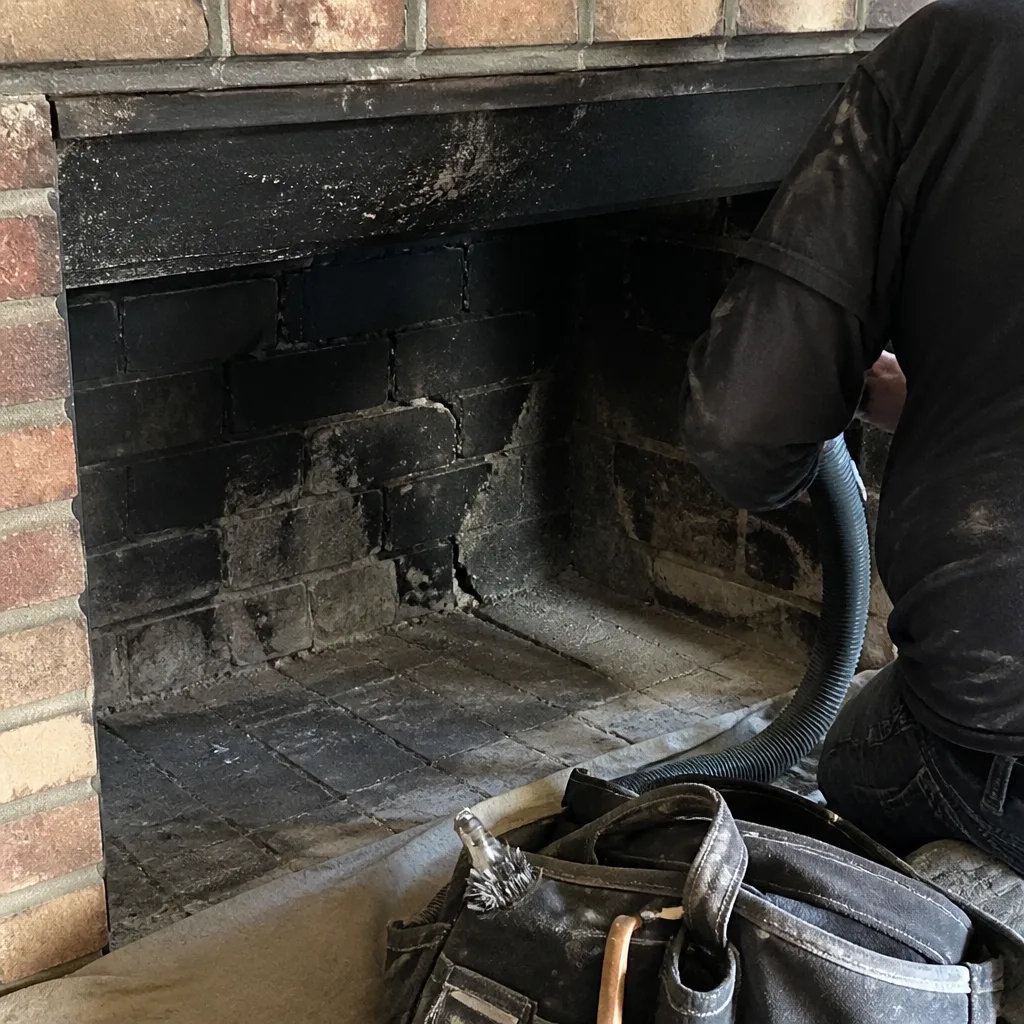 Before
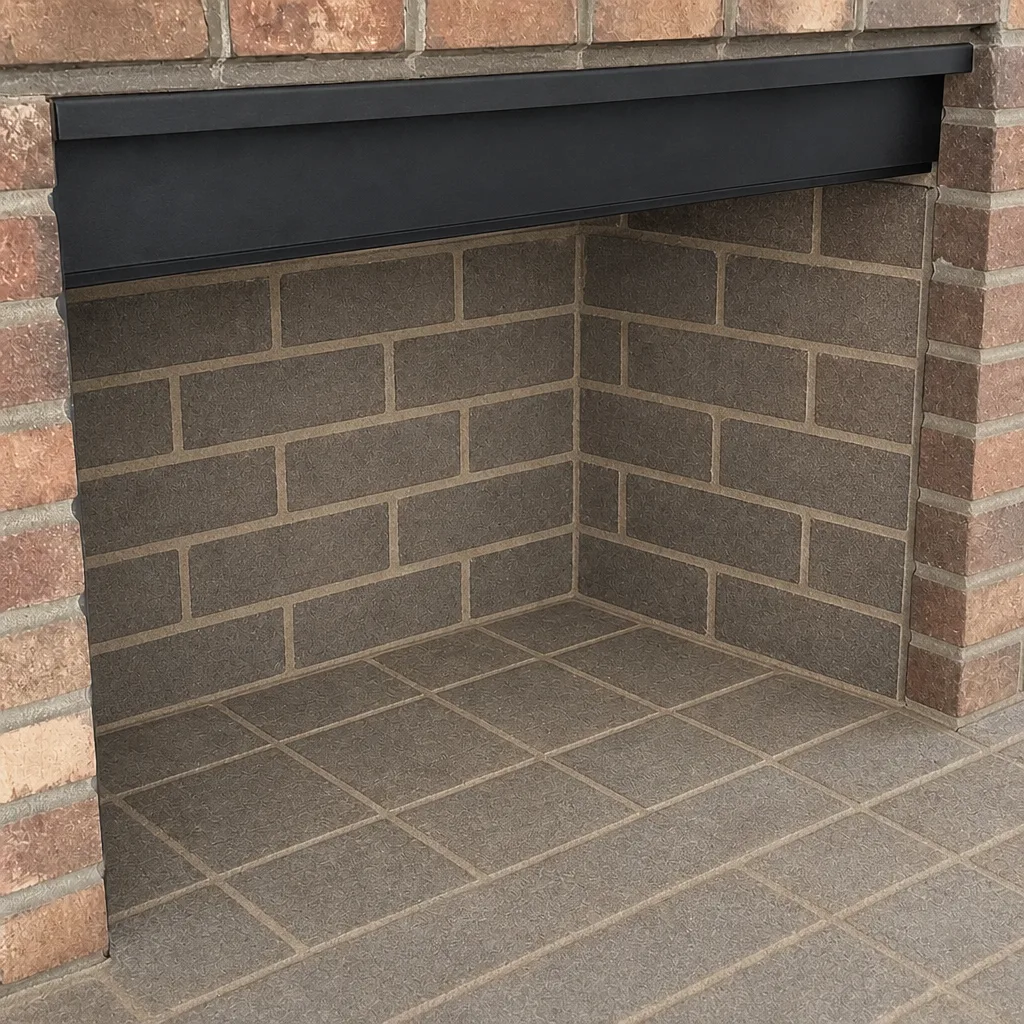 After
 Before
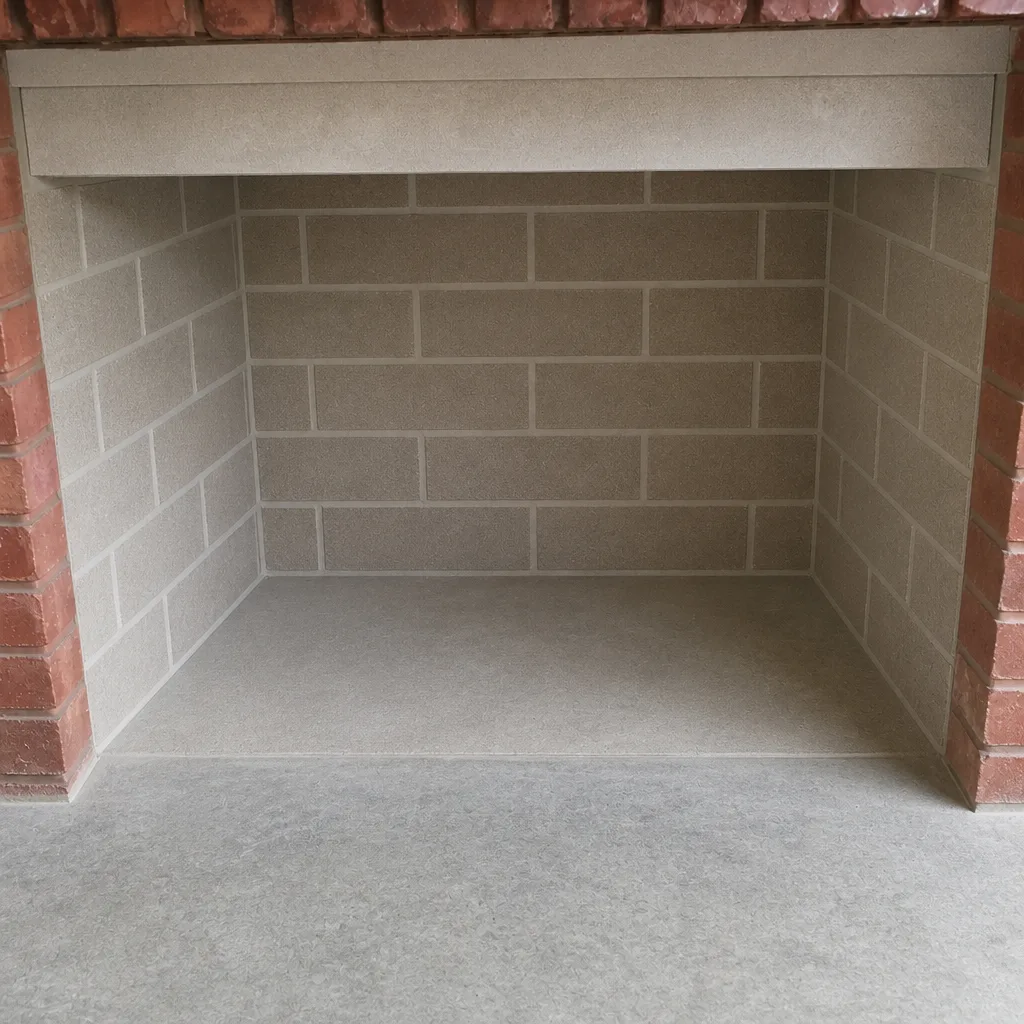 After
Common Mistakes to Avoid
- Waiting until October to schedule the sweep. Sandy’s October calendar is packed with homeowner requests, and a rushed sweep leaves no room for a follow-up if something’s found. Booking in spring or early summer keeps the whole cycle on schedule.
- Skipping the cap and crown because they “look fine from the street.” Cracking in the crown is often invisible from below and only appears when it’s walked on. A close inspection in spring reveals issues that a curb-view check misses.
- Burning unseasoned wood. Wet wood produces more creosote and less heat. In Sandy’s dry climate, properly split and stacked wood dries quickly – but only if it’s actually stacked and covered before the season starts, not a week before the first fire.
- Treating efflorescence as cosmetic. That white staining is water moving through the masonry. Cleaning it off without finding the source means it comes back every year and the underlying problem keeps damaging the structure.
- Assuming a “sweep” includes inspection. Sweeping is cleaning; inspection is diagnosis. They’re different services, and a sweep that doesn’t include a real inspection with documentation is only half the job.
- Ignoring mortar joint recession because the brick looks fine. Receded mortar is the earliest and cheapest masonry problem to fix. Once brick spalling starts above a receded joint, the repair gets more complex and more expensive.
- Letting damage run for multiple seasons before calling. Chimney deterioration is cumulative in a freeze-thaw climate. What starts as a hairline crack in a Sandy crown becomes a spalled brick and a failed liner if it goes through three or four winters unfixed.
When to Call a Professional
Some items on this checklist are yours; some need a trained sweep. Call us when:
- It’s been a full burn season since your last sweep.
- You’re reactivating a fireplace that hasn’t been used in years – the flue condition is unknown until inspected.
- You see any smoke entering the room when the fire is going, or a backdraft that wasn’t there before.
- You find spalling brick, deep mortar recession, or a visible crack running through the crown.
- Your damper sticks, doesn’t seal, or needs replacing.
- You’re buying or selling a Sandy home and need a documented chimney inspection for the transaction.
- You notice a strong odor when the fireplace is not in use – that’s a sign of a draft or moisture problem worth investigating.
Sandy Chimney Sweep offers free estimates in Sandy – call (855) 658-5256. We inspect it, we explain it, and we fix it right, from the firebox to the crown. One specialist handles it all.
Frequently Asked Questions
Once per year for most households that burn regularly through the winter, and once per year even for light use. Sandy’s long burn season – often late October through March – usually produces enough creosote that an annual sweep is the sensible baseline. If you burn green wood, or burn hot and often, an inspection may recommend a second cleaning. Call (855) 658-5256 to get on the schedule in late spring or early summer.
Yes, because they’re separate systems that fail in different ways. The flue handles smoke and creosote; the cap and crown handle water, snow, and wildlife. A clean flue on top of a cracked crown is still a chimney taking in water every storm. In Sandy’s freeze-thaw climate, a crown crack that’s ignored through one winter becomes a two-winter repair. Call (855) 658-5256 for a cap and crown check alongside your next sweep.
A sweep cleans the flue; an inspection diagnoses the whole system, including the liner, cap, crown, flashing, firebox, and damper. Sandy Chimney Sweep offers inspections as a standalone, documented service – not a sales pitch dressed up as a free look – so you get an honest baseline in writing. Many homeowners get both in the same visit. Call (855) 658-5256 to book.
Efflorescence is the white chalky staining that appears when water moves through masonry and evaporates, leaving dissolved salts on the surface. In Sandy, it usually points to a water source somewhere above – often a cracked crown, worn flashing, or missing mortar. Cleaning the staining without fixing the source means it returns. Call (855) 658-5256 for an inspection to find where the water is entering.
Not safely, especially in Sandy’s climate. Chimney deterioration from freeze-thaw cycles happens quietly between inspections; a chimney that looked fine last spring can have new crown cracks or mortar recession after one more winter. Annual documentation is what makes year-over-year change visible. Call (855) 658-5256 to schedule this season’s inspection.
The risks build in layers: creosote accumulates in the flue (raising chimney fire risk), water gets into failed caps and crowns and damages masonry, and liner damage lets combustion gases reach the home structure instead of venting out. None of that is an emergency on day one, but every skipped season adds to the repair scope. Call (855) 658-5256 for a free estimate so you know what you’re working with before the season starts.
The Bottom Line
A chimney maintenance checklist for Sandy homeowners should follow the local calendar, not a printed template. Sweep after the burn season, inspect and repair in summer dry weather, verify before the first freeze, and watch masonry for spalling, efflorescence, and mortar joint recession after each hard freeze. Separate the cap and crown into their own check because they fail differently from the flue. Document everything year over year so you can see trends, not just snapshots. And when something needs a trained eye, get a documented inspection rather than a sales-pitch walkthrough. Our technicians have up to 9 years of experience, and we work with DuraFlex liners, HeatShield ceramic resurfacing, and Gelco products so we can handle everything from routine sweeps to structural restoration. Call (855) 658-5256 for a free estimate. We answer 24/7. Fast dispatch from 7am to 7pm, Sunday through Friday.
Written by the team at Sandy Chimney Sweep.